- March 23, 2026

-
-
Loading
Loading
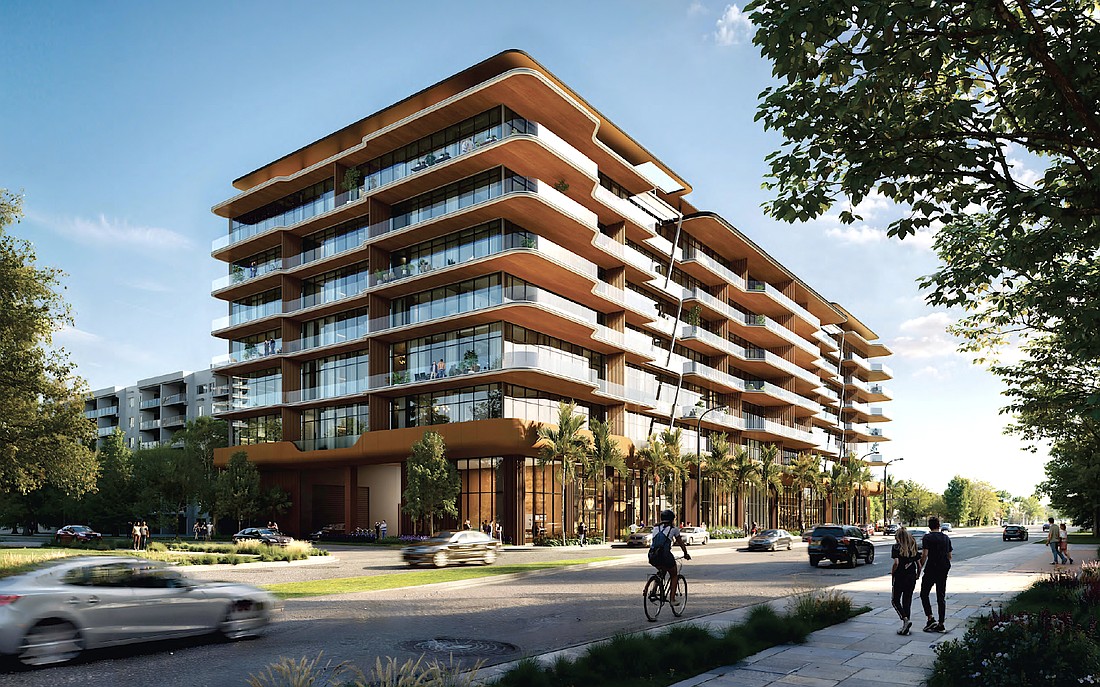
It is said twice is a coincidence and three times a trend. That a second condominium tower planned to include a hotel-like component is now being proposed in downtown Sarasota, though, is starting to look more like a trend.
While the developer of Saravela at the 400 block of North Tamiami Trail continues to navigate through the city its plan to allow condo owners there to rent their units at a three-day minimum, a project across Mound Street from Marie Selby Botanical Gardens has changed course from a traditional condo building to a condo/hotel as well.
At a March 18 meeting of the city’s Development Review Committee, the third submittal of what was formerly known as 777 South Palm was presented as The Well Sarasota.
Proposed by developer Unilog Group of Miami, the project had already received partial DRC sign-off in August as a 66-unit condominium building that included five affordable housing units. The reconstituted proposal now includes 28 traditional condominiums and 72 hotel/condos.
According to the submitted site plan, the hotel/condo rooms range from single rooms of 374 square feet to one-bedroom suites at 1,096 square feet with junior suites of a variety of sizes in between. The residential condominiums are on floors four to six with rooftop amenities on the seventh floor.
The project was re-issued partial sign-off by the DRC, meaning only a few comments remain to be addressed.
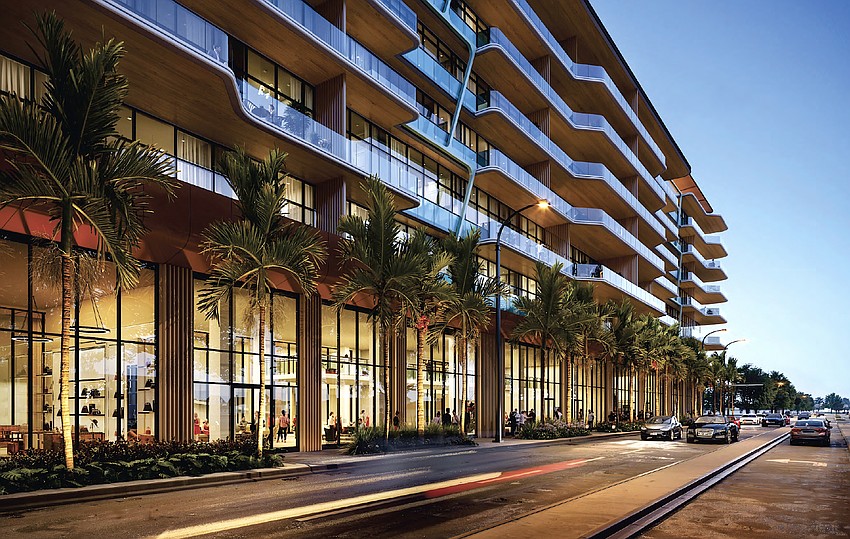
Hotels are a by-right use at both locations — Saravela straddling Downtown Bayfront and Downtown Core zone districts and The Well in Downtown Edge. While somewhat similar, in addition to being on opposite ends of downtown, there are differences. Saravela would take on more of the familiar beach condo model in which owners may reside there full-time, or serve as a vacation or second home with the option to offer them as short-term rentals.
Rental activities at Saravela would be executed internal to the building rather than on the open vacation rental market. However, rentals of fewer than seven days by code are considered transient lodging.
The hotel/condo model operates more as hotel first. Units are individually owned and owners may use them whenever they wish, but they are managed by a professional operator as low-maintenance, income-producing rental properties.
If Saravela must be called a hotel, GSP Development President Larry Debb says, so be it.
“If it's a hotel and that's what they need to call us, I don't care what you have to call us,” Debb said. “But maybe nobody will want to rent it out for three days anyway or not rent it out at all whether it’s three days, seven days or 30 days.”
Hotels and full-time residences are built to different standards, Debb says, and in the case of Saravela, as a residence-first, that standard is higher. “We haven't asked for one variance. We're abiding by all the building construction code requirements,” he says.
After winning partial staff sign-off and City Commission approval of the alley vacation of Fourth Way, Saravela introduced the concept of three-day rentals. Debb argues no changes have been made to the building itself, including the 40 attainable-priced for-sale units scattered throughout the project, 10 more than the required 30 in exchange for a height and density bonus.
Because the project was introduced as condos and rentals of fewer than seven days require transient lodging designation, though, the city’s position is the alley vacation approval is invalid and Saravela must be resubmitted as a hotel.
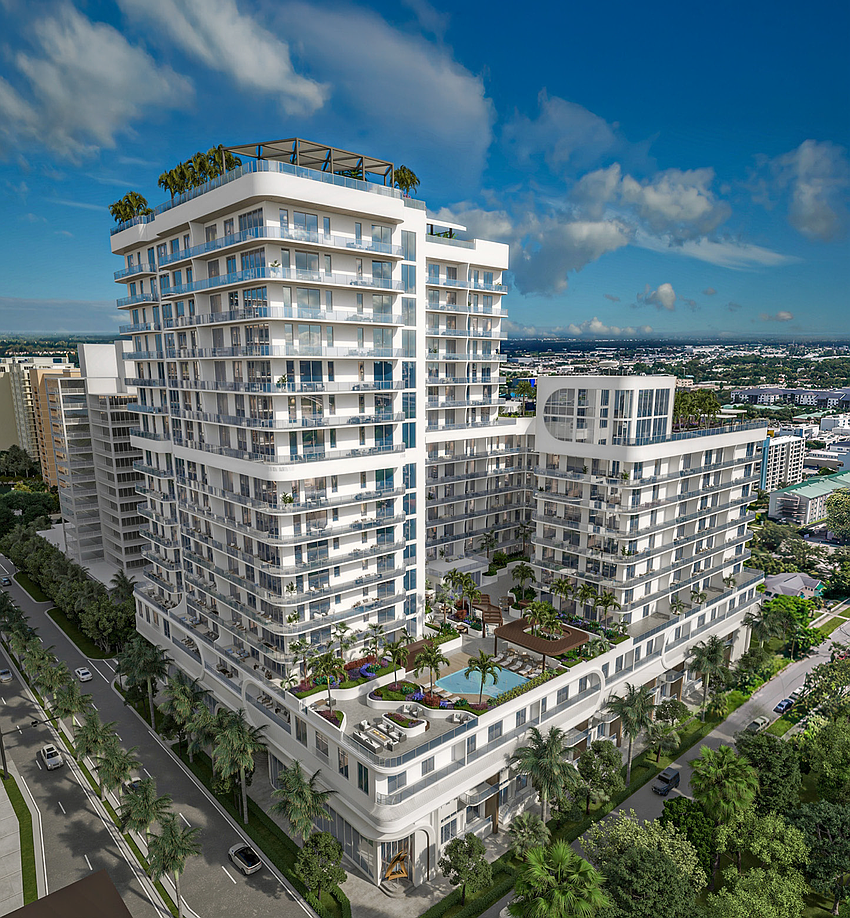
In a March 16 letter to attorney Patrick Seidensticker, who represents GSP, Development Services Director Lucia Panica writes that offering transient lodging at Saravela constitutes a substantial non-conformance with the approval of the alley vacation and such use requires an amendment to the ordinance.
“This amendment process would require the same process as the initial right of way vacation proposal,” she writes, “including a community workshop, Development Review Committee review, Planning Board public hearing and City Commission public hearing.”
In other words, starting from the beginning.
A meeting between Saravela representatives and city staff for further discussion is scheduled for March 25. Asked by the Sarasota Observer whether he would undergo the alley vacation again if required or drop the three-day rental program, Debb says: “We’ll see after (Wednesday’s) meeting.”
At this point, Saravela's options appear to be:
“At their core these are residential condos,” Seidensticker says. “What Larry would like to do is provide these owners with the choice to rent them for periods of less than seven days. The city's interpretation of their code is that anything less than seven days has to be categorized as transient lodging. We don't agree with that, that these are hotel rooms.
“There’s a gap in the code.”
Bill Waddill, a senior planner at development consulting firm Kimley-Horn and a member of the Downtown Master Plan Update Committee, had been lukewarm to the concept of short-term rentals of downtown condominiums — which is to say he didn’t think much about it one way or the other. Living downtown for five years now, the last two in a condo tower in The Quay, he sees it as a win for condo owners, downtown restaurants and merchants and, by extension, the city.
After moving into The Quay, he says he experienced personally condos costing millions of dollars being largely empty much of the year, particularly noticeable when looking up at night and finding lights on in only a handful of residences.
“We're building this luxury ghost town, which maybe sounds negative toward luxury, but that's not the point,” Waddill says. “The point really is you see all these beautiful buildings, and no one is there 10 or 11 months of the year.”
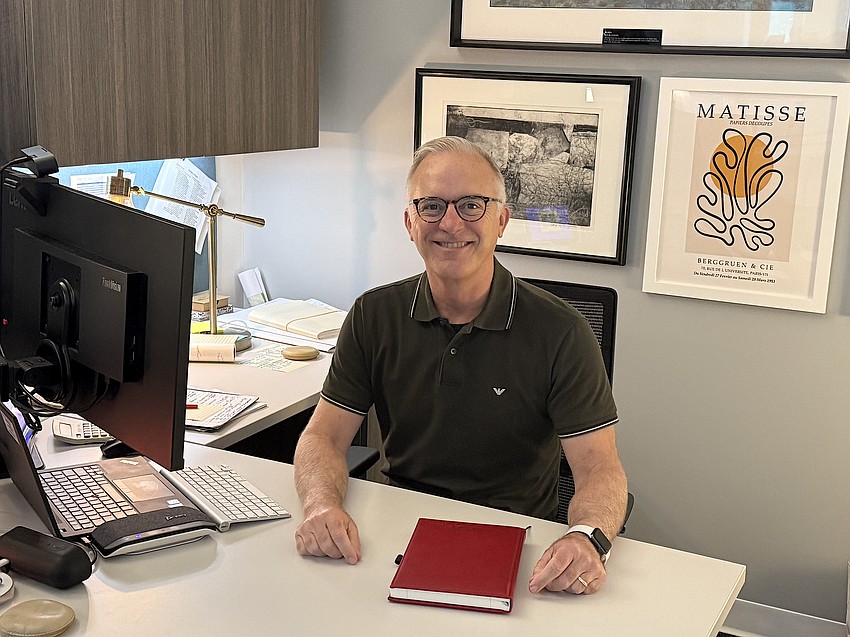
Condominium associations generally do not permit short-term rentals in their restrictive covenants. The concept, Debb says, is popular in resort areas beginning in the West and gaining notoriety in high-travel metropolitan areas such as Miami.
Short-term rentals not only help offset ownership expenses, Debb says, but also offer families an option to booking single-family vacation rental homes or multiple hotel rooms to accommodate everyone.
As Sarasota County’s tourism numbers have lagged in recent years, Waddill says a greater variety of accommodations options may be one answer while simultaneously benefiting businesses that struggle when seasonal condo occupants are gone for months at a time.
“I'm not sure the market doesn't need to evolve,” Waddill says. “It seems to me if there's ongoing conversation about single-family neighborhoods being overrun by vacation rentals, that tells me there's market demand, and the market has stepped in to provide supply. We’re still trying to figure out what the guardrails should be, and how to put them in place.”
The search for those guardrails now shifts to Saravela and The Well Sarasota, and whether Saravela will pursue final approval to redefine itself as a transient lodging project. Debb argues that should mean little more than a change in how Saravela is defined as no changes to the building are proposed, other than some minor Planning Board adjustments not related to short-term rental use.
As for The Well, Unilog Group seeks no adjustments and the project conforms to all code requirements and, therefore, requires only administrative approval.
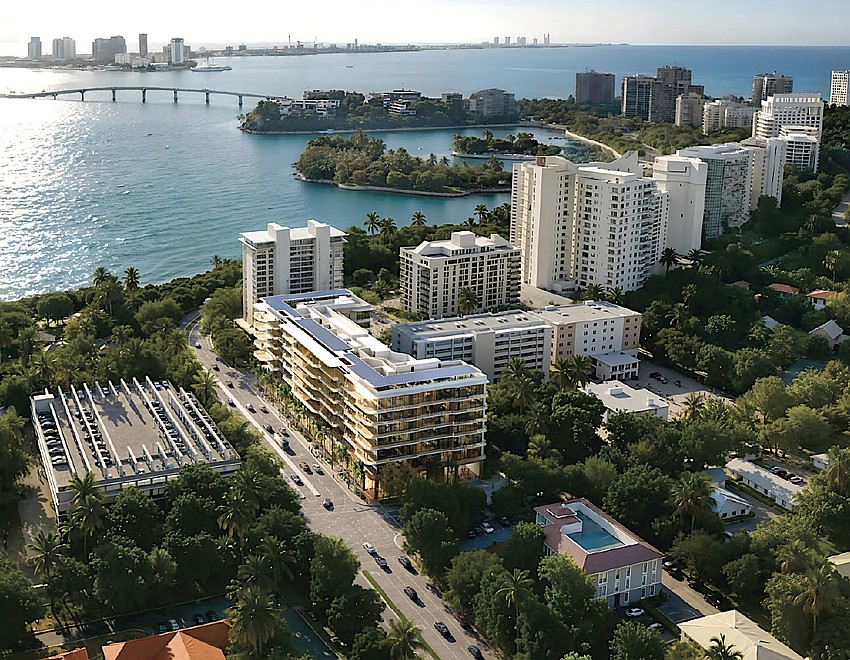
According to its submission, the hotel/condo portion of the building will provide customary lodging services such as linen, maid service, telephone, etc., and is consistent with the definition of a hotel as defined by city code.
There is a suggestion within the development community that similar projects are awaiting disposition of Saravela and The Well before coming forward, perhaps signaling a tectonic shift in the luxury condominium market here.
“Can we all agree we need heads in beds during more than a few weeks a year in a condo unit to have a vibrant downtown and surviving retail and restaurants?” Waddill asks rhetorically. “Being a desirable place where people want to be, it's a whole lot easier to put up guardrails and incentivize the kind of behavior that you want and protect your sense of community.
“That's a lot better problem than there being no jobs, people leaving, businesses closing and houses empty. That spiral is really hard to turn around.”
This article originally appeared on sister site YourObserver.com.