- March 10, 2026

-
-
Loading
Loading
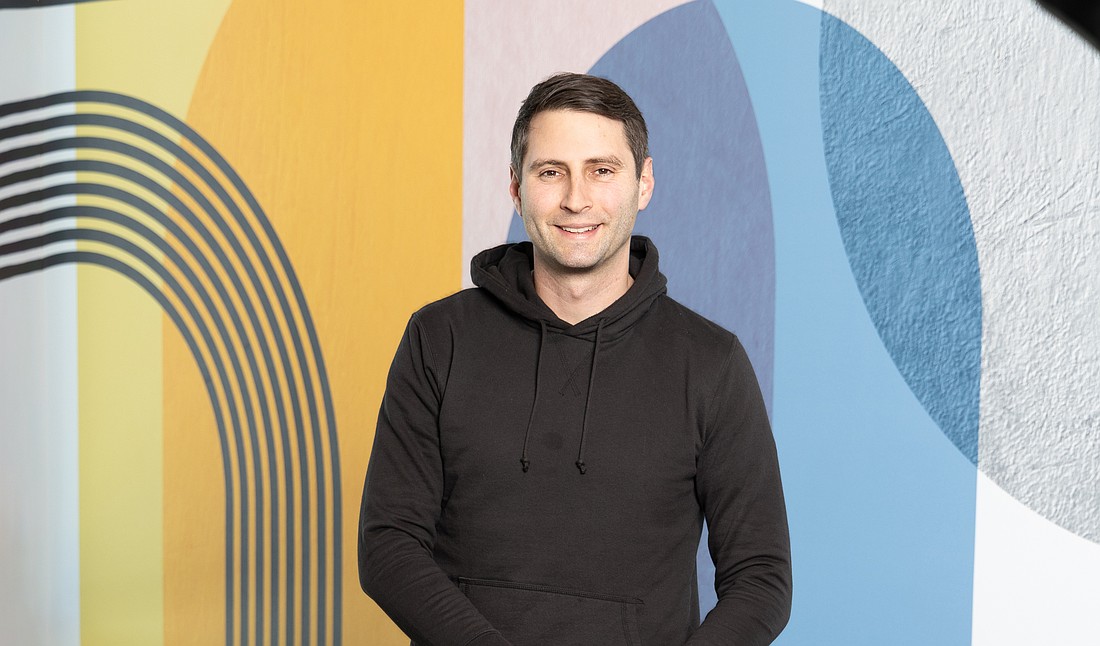
From the start of his pitch, Jon Mest said he didn’t enter a recent “Shark Tank” like pitch competition in St. Petersburg for the money — or the investors.
“We’re not fundraising, but we are looking for customers,” Mest told the packed room of community business leaders and investors gathered to watch the competition in early February at spARK Labs by Ark Invest’s Innovation Showcase. Founded in November 2025, spARK Labs by ARK Invest is a nonprofit startup incubator that provides mentorship, workspaces and resources meant to accelerate growth.
“I've always appreciated the idea of building smartly, building slowly, getting customers to work with you, treating your customers well, doing other things that I know that works and that could bring long term, long standing value,” Mest told the Business Observer after the event. “That might not agree with the ‘build fast and break things,’ kind of mindset of maybe a (venture capitalist), but that led me to where I am today.”
It also led the 35-year-old Philadelphia native dressed in a hoodie, skinny jeans and sneakers to beat out five other entrepreneurs working in investor Ark Invest Management CEO Cathie Woods’ St. Petersburg-based startup incubator. Mest won over a panel of judges with his pitch for ChatRank, a company he co-founded with friend Joe Delgado in December 2024. ChatRank is a web-based program that helps companies and brands improve their online search rankings and perceptions in AI systems, particularly ChatGPT and Google.
ChatRank has 25 employees spread worldwide, Mest says. He declined to disclose the company's current revenue, saying only ChatRank's monthly recurring revenue has grown at a rate of nearly 700% in the past six months.
The idea for ChatRank arose from a problem the former Wall Street investment banker ran into after acquiring another company, a public relations software platform called JustReachOut, in early 2024.
Mest says he was spending thousands of dollars a month on Google advertisements for JustReachOut when, suddenly, they just stopped working, — “like I wasn’t spending any money at all.” Instead of having links to JustReachOut pop up to the top of a Google search page, users would instead be greeted with an AI-generated overviews answering their search query and “giving away all our answers for free and grabbing all the traffic.”
“All of the sudden that No, 1 blue link we fought so hard for and were spending so much money on just disappeared overnight and our traffic just kind of came to a halt,” Mest says. “This was a big problem, but we saw an opportunity.”
Mest’s partner, Delgado, began reverse engineering how Google AI decides what to include in its overviews and core search pages and landed on a mode that works. Referrals began pouring in, not only from Google but from ChatGPT, Claude and Perplexity, the later two being AI-powered, conversational search engines capable of completing complex tasks like writing, coding, and analysis.
Delgado and Mest had hit on something big — their basis of their second business. The two began slowly recruiting customers, determined to build ChatRank without any venture capital money, only customer traction.
“We could easily take as much easy money as we could from VC but then we would have bosses now, and you have to, like, answer to them and you don’t really get to make decisions anymore.” Mest says. “You’re going to lose something in return, lose that drive and we don’t want that. We’re just going to keep bootstrapping because the truth is we don’t really need the money, it wouldn’t help us do anything differently from how we do things now.”
ChatRank's goal, he says, is to help businesses that “just have no time for marketing,” whether it’s a mom and pop coffee shop or a multi-brand restaurant group. So far, the team has onboarded “dozens of customers,” Mest says.
Instead of paying for traditional marketing services, ChatRank asks for one hour of a business owners’ time each week to help fill in missing details about what makes their business unique that aren’t getting picked up by the AI search engines — what Mest calls “anti-AI slop.”

ChatRank’s software is able to sweep internet searches for the information that helps businesses and their competitors get picked up by different AI platforms used for online searches. When someone searches for the best coffee shop in town, for example, an AI tool won’t give them the same answer twice — they’re built on “non-deterministic models” that randomize responses and help the program “think critically,” Mest says.
“And so you need to understand, ‘Okay, when I get reference, when they say I am the best, why is that? And when they say, my competitor is the best? Why is that?’ The AI models will actually tell you why,” he says. “Maybe your website says you make the best lattes, or your competitor got chosen because influencers were talking about their lattes on Instagram.”
ChatRank culls all that information together into a complex, technical recommendations engine that breaks down what company websites, social media posts or other marketing materials need to say to get picked up by AI search engines consistently. The program will even write that blog post or YouTube script for the business, but Mest says what makes ChatRank special is that it asks businesses to edit that AI-generated comment with the added “human element” of novel insights and unique selling points.
“We have the business owner add in those things that AI can’t ever come up with on its own, that unique insider knowledge that only the business owner has,” Mest says. “No matter how much AI evolves and develops, people will always be what makes a business unique, so we just bring those selling points to the forefront. We just take the annoying, hard part of actually doing the marketing out of the equation and let our customers just fill in the blanks.”
By the end of the first quarter, ChatRank plans to launch a new update to its software that will make the program much more agentic, Mest says — capable of acting autonomously and proactively to achieve a specific goal instead of relying on human instruction and directions. It's the difference between working with an AI chatbot and working with an AI capable of planning, reasoning, and using tools to achieve a goal with minimal human oversight.
Despite his win at the Innovation Showcase, which came with a giant, cardboard check for $1,000, Mest says his company is staying true to its “north star” and continuing to steer clear from VC companies “swarming” around ChatRank.
“Right now we have competitors out there raising millions of dollars doing the same thing we’re doing, but for us, we didn’t raise that money because, first of all, I don’t want it. I don’t need it. I don’t want to give my company away for that,” Mest says. “And secondly because even if we were handed a check for $20 million tomorrow I don’t know how we would spend it or what we would do differently. We’re growing organically and building smartly on top of that and we know it’s not like this is a winner take all market. It’s way too big for one winner to come out on top. We’re just positioning ourselves to be in the mix, available and ready with the best product we can build. That’s our advantage.”
Yet the $1,000 check, presented by the event’s co-sponsor, Dynasty Financial Partners, is still nice. And how does Mest plan to spend his winnings? “I promised the five other entrepreneurs," he says, "that drinks were on me."