- July 15, 2026

-
-
Loading
Loading
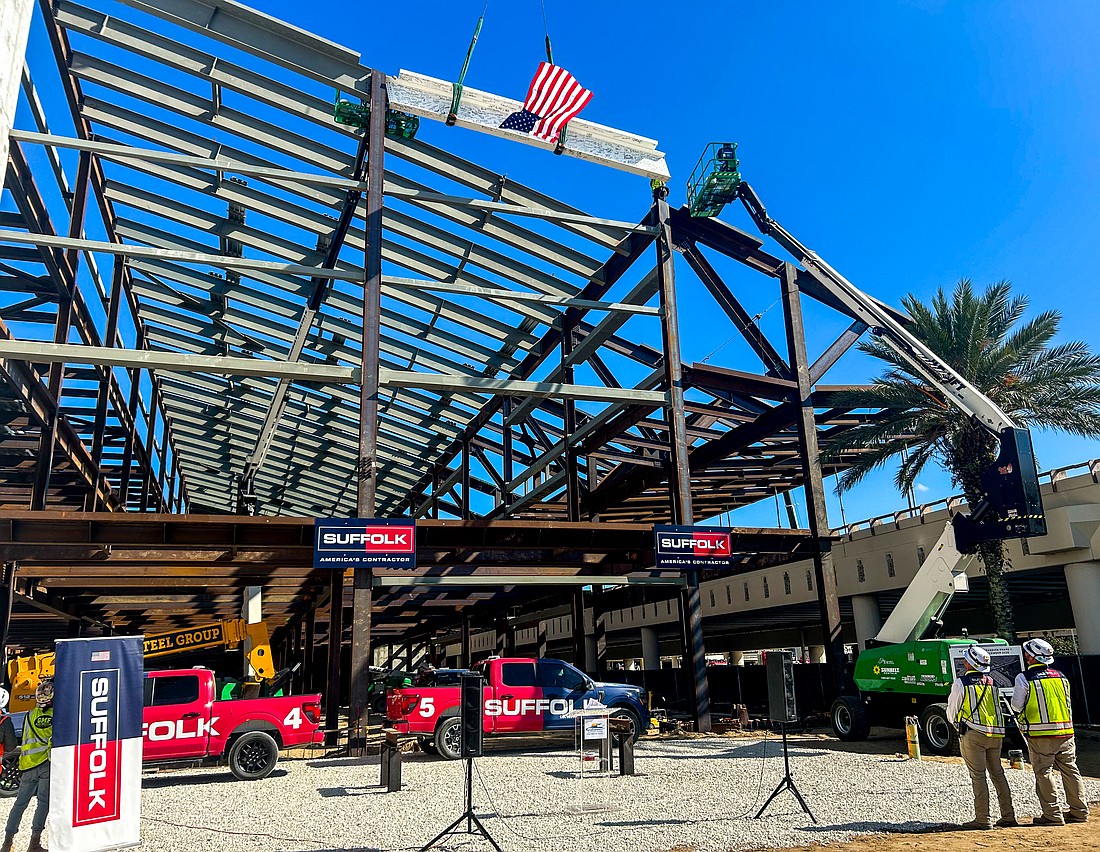
At first glance, Suffolk Construction’s newest jobsite is a standard scene. Rebar columns pierce the sky and construction crews scale imposing cement walls. Tower cranes loom overhead, casting shadows on the runway of Southwest Florida International Airport in Fort Myers, where Suffolk has spent the past year piecing together a new, 14-gate concourse building. It's a $1.1 billion expansion project.
On this project, though, the builders are utilizing something far more unique. That's because alongside the project managers, builders and safety experts is a new kind of teammate: an AI engineer. Not someone meant to replace the expertise of Suffolk’s tradespeople, but someone dedicated to helping every member of the project team use artificial intelligence to build smarter, faster and with greater confidence.
The Fort Myers airport expansion is among the first projects under Suffolk Construction’s “Jobsite of the Future” program — a new operating model roughly 10 years in the making that brings AI directly to where buildings come to life, the company says. Boston-based Suffolk did $7.36 billion in revenue in 2024, according to Forbes Magazine; the company, with some 3,200 employees, was No. 83 on the magazine's 2025 America's Top Private Companies list.
Rather than treating artificial intelligence as a piece of software stuck in a machine, Suffolk is embedding AI engineers on active construction projects. Their mission is simple: identify where AI can create measurable value and work side-by-side with project teams to make it happen, leveraging real-time data in the process.
Their work, say company officials, centers on three areas where AI can have the greatest impact in a construction project: design coordination, schedule and process.
“Jobsite of the Future is our boldest investment yet,” John Fish, Chairman and CEO of Suffolk says in a statement to the Business Observer. “As costs continue to rise, labor shortages persist and productivity declines, the construction industry has reached an inflection point. We believe Jobsite of the Future and our use of artificial intelligence and data will fundamentally change that trajectory and redefine how America builds for generations to come.”
Suffolk was founded in 1982 and today specializes in general contracting, construction management and design-build services across commercial, healthcare, education, aviation and government sectors.
About a decade ago, Fish recognized the growing inefficiencies and declining productivity across the construction industry and made an early investment of more than $100 million in data, technology, infrastructure and innovation capabilities meant to position Suffolk for the future, says Doug Harrison, vice president of corporate operations.
That investment is the foundation of Suffolk’s AI-enabled construction ecosystem today. Through Jobsite of the Future, AI engineers are now able to automate many of the day-to-day tasks that used to require lengthy paperwork, documentation and emailing back and forth, Harrison says. Day-to-day administrative tasks like schedule updates, requisition reviews, submittal coordination and shop drawing reviews are now produced in a matter of minutes by AI engineers using historical data from past Suffolk projects. And since they’re embedded on the job, their proximity to operations allows them to identify inefficiencies first hand and rapidly deploy AI-enabled solutions to improve execution and productivity, Harrison says.
“We are not building AI to replace people,” Harrison says. “The scale of growth that we have in the construction industry right now is just rapid. Our people are constantly being stretched into more and more responsibilities, and so how do you start to augment them and do those things that are those meaningless tasks that are really just keystroking and get their expertise back into the areas that matter and are going to prevent risk for us, our clients and our trade partners and make the process overall better for everybody involved?”
Suffolk launched its Jobsite of the Future model in January, Harrison says, and now, in addition to Fort Myers, has four AI engineers working on construction projects in Cedar Rapids, Las Vegas, New Haven and San Luis Obispo.
Cory Greenfield is Suffolk’s AI engineer and Site AI Manager working at the Southwest Florida International Airport. That project is a historic expansion expected to be completed in December 2027, delivering a new 14-gate Concourse E; a centralized 16-lane TSA security checkpoint; and upgraded ticketing, baggage handling and concessions.
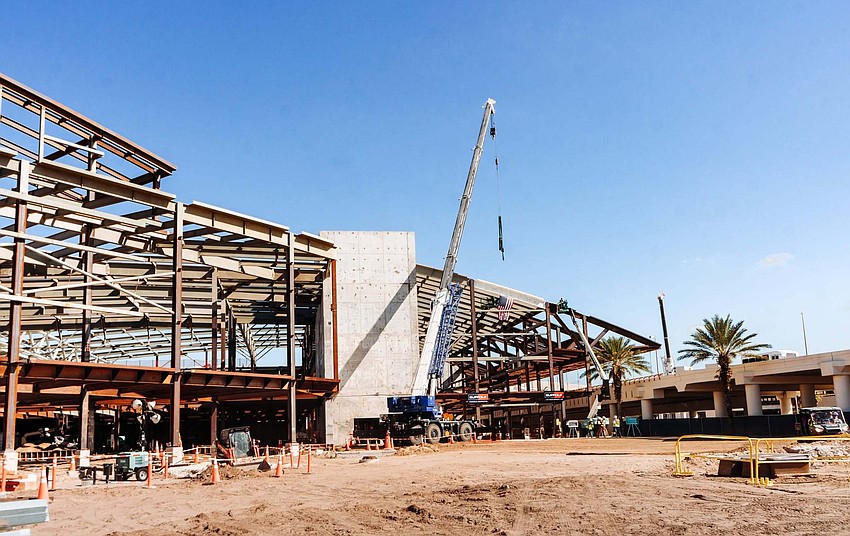
“Software engineering on a construction job site is kind of a brand new concept, so I’m still learning,” says Greenfield, who joined Suffolk’s team in February. “Project managers and myself have sat down and looked at different ways we can speed up processes with AI — how we can optimize it and kind of do some legwork for them in the early stages so people can save some time and focus their energy more on other parts of the project.”
A few ways Jobsite of the Future is saving Suffolk time, energy and, note company officials, money include:
What makes Suffolk’s new AI-powered work model unique is it centers on deploying a dedicated software engineer to the scene working with teams in real time, Harrison says. That includes engineers like Greenfield, who comes from a data science and software engineering background and has worked for entities like Raytheon, NASA and the U.S. Army Corps of Engineers.
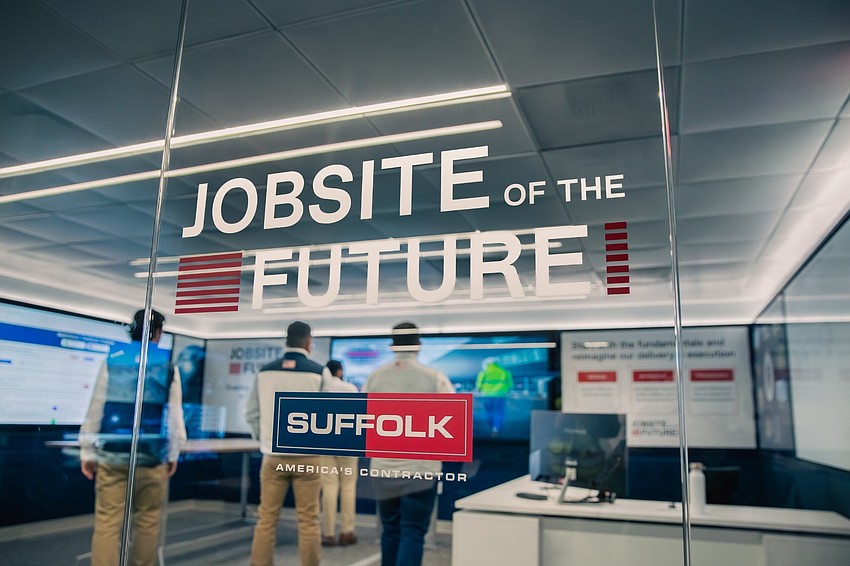
“I don’t know of any other companies that are hiring engineers and sending them out to jobsites right now,” Harrison says. “I think we’re cutting edge in that, and I think we’re going to be rewarded for it because it's making the fastest impact on our builders.”
Suffolk has invested roughly $40 million into a building at its Boston headquarters called “100 Mag” that houses an AI studio team dedicated to developing new tools and scaling the programs for the company to use nationally.
Since implementing the Jobsite of the Future program, Suffolk’s safety performance metrics have been cut in half, Harrison says. Schedule variance has improved to more than 80% and margins and cost overruns have been reduced for both the company and its clients. Perhaps most importantly, Harrison says, Suffolk Construction is on track to become a $10 billion company by next year.
“I really do attribute that," he says, "to the data journey."