- March 13, 2026

-
-
Loading
Loading
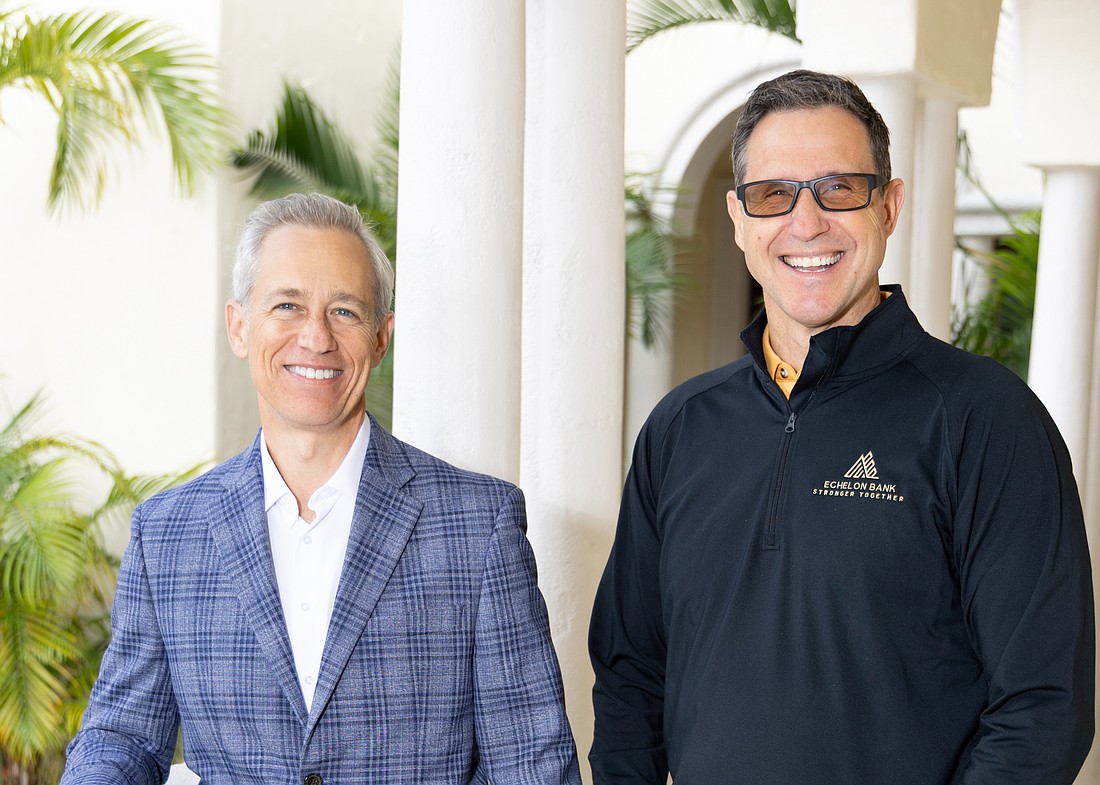
Chris Kneer never thought he would one day work at a bank, let alone help start one.
He always thought he would write mystery novels, or be a professor at Creighton University in his hometown of Omaha, Nebraska. But that was before one particularly dreary Christmas Eve, when some water skiing fraternity brothers convinced him to move out of his parents house and join them in Florida. It was before he went from waiting tables to working as a financial analyst in Tampa, watching smaller community banks get acquired by bigger regional and national names over and over again.
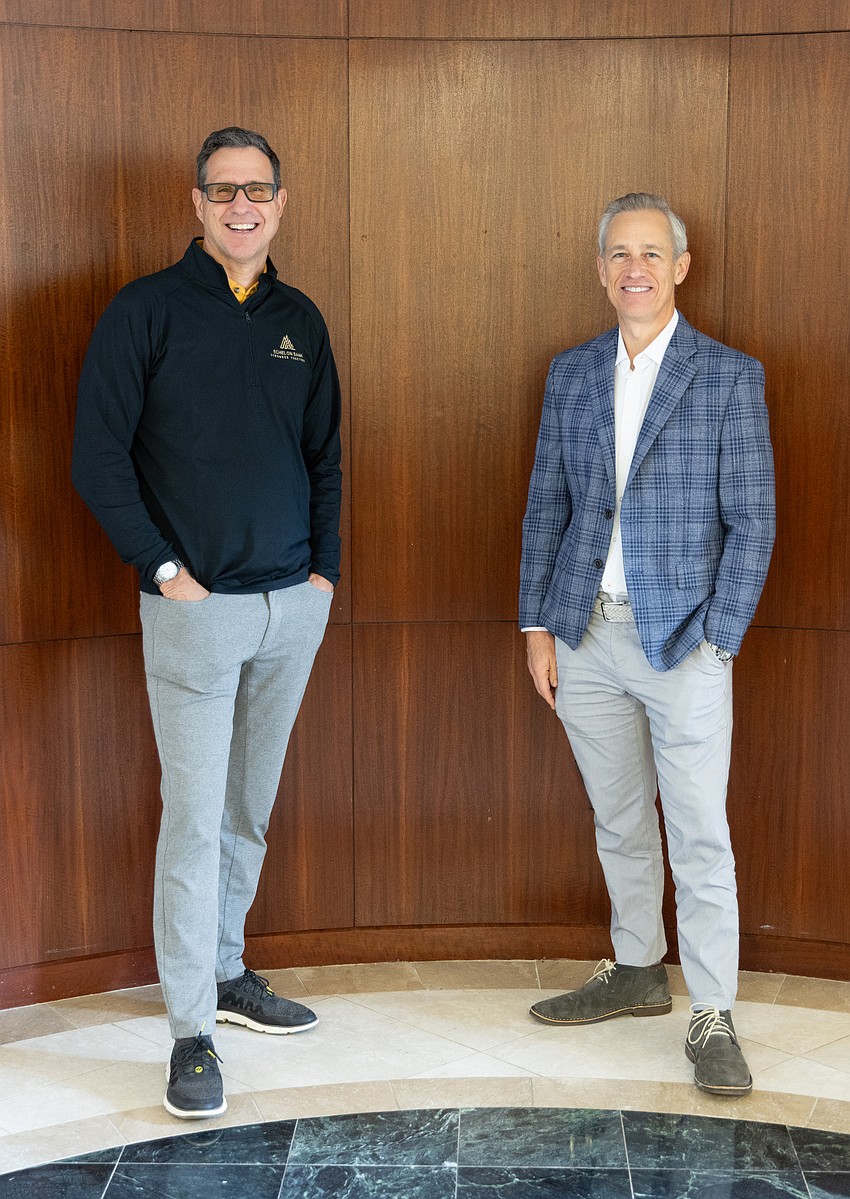
And it was before he met Rob Shaw, the man who recruited Kneer about two years ago to help him launch the first startup community bank the Tampa Bay region has seen in years — an entity called Echelon.
“Honestly, when I heard what they wanted to do I thought they were crazy because everybody says you can’t start a bank these days and it’s been years since anyone has done it in our area,” says Kneer, an executive at Clearwater-based USAmeriBank, and the institution that bought it, Valley Bank, for nearly 15 years. “I had actually retired from banking at this point, but it was always in the back of my mind that they were doing this interesting thing I really believed in — that community banks serve a very important purpose that’s just different from these large players who are coming in and acquiring everyone. And I think the markets really really want one.”
Unlike Kneer, now Chief Banking Officer at Echelon, Shaw — the bank’s president and CEO — always knew he wanted a career in finance and even served in the financial division of the U.S. Army after graduating from West Point.
Shaw, 52, has worked in banking in the Tampa Bay region for nearly 30 years, from the private sector to various roles at banks including AmSouth/Regions Bank; USAmeriBank; Northern Trust; Signature Bank; and Clearwater-based Flagship Bank. Signature, earlier in his career, is where he got his first taste of true local banking, running its Clearwater division.
“After that experience I knew community banking was where I wanted to stay,” Shaw says. “You’re able to be much more nimble, more agile and take better care of your clients. You’re much more of a consultant, not just an order taker, and you’re much more empowered to go to a company, tell them what you see that they need and make it happen. There’s no boss in a different state telling you yes or no.”
The idea of launching his own community bank had been in the back of Shaw’s mind for decades, he says. Around Thanksgiving 2024, Shaw began recruiting a team of former coworkers like Kneer to join him and, by late July, Shaw was able to file a charter for Echelon Bank with the Federal Deposit Insurance Corp. It’s the first de novo bank in Tampa Bay to launch in five years, FDIC records show, and one of a handful of community banks across the nation.
If all goes according to plan, Echelon Bank could be open by late April, Shaw says.
Economic conditions are ripe for a new community bank, the duo says.
After the 2009-10 recession, when bank failures peaked, federal regulators tightened capital requirements. That led to a dearth of de novo banks.
In recent years, after what Shaw calls a “deep freeze" in the industry, a few community banks popped up statewide, in places like Sarasota, Naples, Fort Lauderdale and Miami.
Told in numbers, when he started his career in the early 2000s, there were 315 banks headquartered in Florida, Shaw says. Now, records show, there are 67. That's a -78.73% drop.
“That consolidation is a huge reason why we’re doing what we’re doing,” Shaw says.
When it comes to Echelon’s strategy, meanwhile, Shaw says the team wants to be vanilla — ”but vanilla is a great flavor.”
The team wants to bank local, owner-managed businesses — companies that bigger banks often overlook, where decisions to approve loans are often made by someone in a different state they’ll never see, Shaw says. The group also wants to pursue nonprofits, defense contractors, commercial real estate and construction loans and professional executive banking — the “folks who need a little bit more white glove service,” Shaw says — and, of course, individual consumers. Overall, the duo says, Echelon seeks to build multifaceted, deep relationships with clients that will help build both sides of the bank’s balance sheet.
“The crux of it is, you have fewer and fewer banks, they’re getting larger and larger, so it takes more to move the needle,” Shaw says. “They’re looking for larger loans, larger relationships, and there’s a whole segment of great customers who get left behind and told to call a 1-800 number. What a community bank does is send people out to meet them and really take care of them.”
The strategy is already working: the pair say they have heard from large number of investors turned potential clients asking for loans. “People are starved for that relationship and they’ll pay a little bit more for it,” Kneer says.
A challenge, one most new banks face, has been navigating the stringent FDIC process to get to opening day. Starting a bank, after all, has some of the highest barriers to entry of any industry in terms of regulations and startup capital, acquiring necessary technology and assembling an approved board of directors.
That's one reason many don't do it.
Echelon, though, has been met with success. The duo needed to raise at least $23 million to $50 million in capital before the bank’s official launch, and began fundraising in October. So far, Echelon Bank has met about 70% of its goal, with capital raising beginning to accelerate again after the holidays, Shaw says. Shaw, who put up $1 million of his own money in Echelon, says he anticipates meeting the capital goal by the end of this month.
Ariba advisors helped Echelon acquire its technology core, a program used by even multibillion-dollar banks called FIS Horizon that will enable more consumer-friendly digital banking.
Echelon also plans to have a handful of brick and mortar locations. That includes two so far, one in Tampa near the intersection of Bayshore and Bay to Bay Boulevard and the other, main location in Feather Sound in Pinellas County — a location chosen for its centrality in the Tampa Bay region.
With their varied experiences at numerous banks over the years, Shaw and Kneer say Echelon Bank is the cherry picked version of the ideal bank they always wanted to work at. The philosophy is even reflected in their name, Shaw says: Echelon is a cycling term that describes the way a group rides in formations when the crosswinds blow.
“You’re not just a lone rider out there doing your thing, but you become part of a team and everybody’s rotating,” Shaw says. “You end up seeing these cool Echelon formations, the same way birds fly and bees. It’s all about working together as a group, moving forward toward a goal, and moving farther and faster than you could alone.”