




- January 2, 2026

-
-
Loading
Loading
 Image created by ChatGPT
Talk about irony.
No words in this issue — 26 ways organizations use AI — were written using AI.
Or were they?
The Business Observer normally focuses its first issue of a new year looking forward. Often it's an economic forecast, predictions from business leaders about what’s new, hot and next.
This year we changed it up: Going into 2026 we decided to focus on one thing, topic and trend. And what has been bigger than artificial intelligence?
It’s so big that this issue details 26 different ways entities on the west coast of Florida are using AI. We interviewed entrepreneurs, executives and IT leaders. We combed through reports and studies.
And, we did in fact, use AI. Not to write the stories. These are all original reported articles. (Good journalism, especially local reporting like what the Business Observer and our parent company, Observer Media Group, specialize in, requires a significant human touch, we believe. At least for now.)
Yet, as this issue shows, it is hard to avoid AI. It comes up in online searches and off-line conversations. Getting ideas for headlines, social media posts is made infinitely easier with AI. So much so that in editing one story in this section I used Google AI Overview to provide a clear definition of what the GPT stands for in ChatGPT (See No. 16).
Another theme of this issue, beyond AI being everywhere and anywhere, is it’s OK to have a bit of skepticism or uncertainty about doing too much, too fast, with AI. Several people we spoke with expressed that view.
Florida Gov. Ron DeSantis seems to be in that camp. In early December DeSantis — with a dateline of The Villages, one of the most prominent 55+ communities in the country — announced a proposal for an Artificial Intelligence Bill of Rights for citizens. The legislation, he says, “define and safeguard Floridians’ rights — including data privacy, parental controls, consumer protections and restrictions on AI use of an individual’s name, image or likeness without consent.”
Other potential protections, according to the statement, include requiring a notice to consumers when interacting with chatbots; prohibiting entities from providing “licensed” therapy or mental health counseling through artificial intelligence; and providing parental controls for minors which will allow parents to access the conversation their child has with a large language model, set parameters for when the child can access the platform and notify parents if their child exhibits concerning behavior.
That legislation will likely be hotly contested in 2026.
In the meantime, AI, particularly in efficiency, has done wonders for a variety of organizations in the region. In this issue those stories include:
One more point on AI going into 2026, a bit of crowd-sourced advice from the dozens of people we interviewed for this issue: While skepticism is OK, even healthy, don’t be a flip phone in a smart phone world.
That’s the approach of Peggy Wilson, president and CEO of Naples-based ad firm Wilson Creative Group. That firm is bringing AI search to clients, through the next advancement of SEO, called GEO.
“Our goal here,” Wilson says, “has always been to adapt or die.”
Use of AI: To come up with intelligence on movement patterns, safety risks and operational bottlenecks.
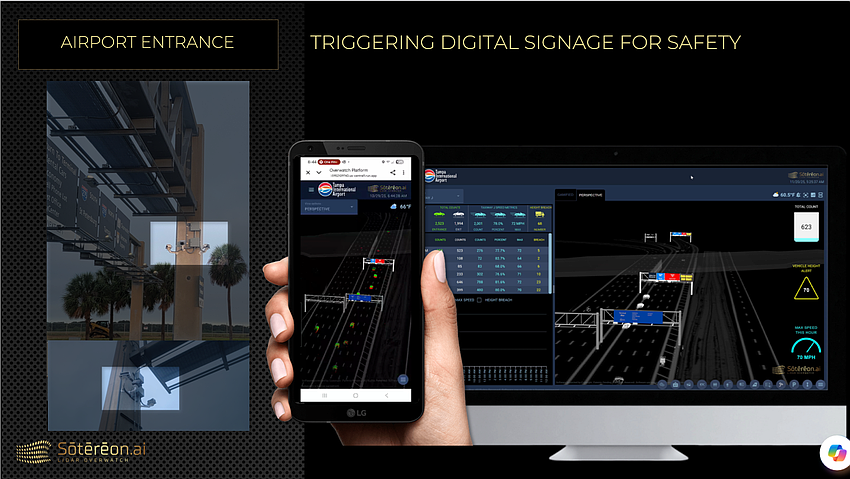
If you head to Tampa International Airport anytime soon, there’s a new technology in place designed to make the experience easier — in ways you can see and not see.
And it’s driven by AI.
The technology is called LiDar, which rhymes with radar and works similarly but using light instead of sound.
Jodie Brinkerhoff, chief strategy officer for the company behind it, Sotereon.AI, says LiDar is basically a sensor that gets mounted on a wall or roof that emits rapid-fire light beams that can’t be seen by the naked eye. What it does is register the light that's bouncing off of what it's flashing on.
“Imagine somewhere above you a LiDar sensor is flashing light,” she says. “What it's going to do is essentially beam back a virtual 3D image of your human form, your desk, and as you move, it's going to continue to send those beams of light.
“And so, it's creating what is essentially a real time digital twin, and we call that the point cloud.”
This is where the AI comes in. The system’s Overwatch program uses AI to take those images and classify them.
The data allows the airport to monitor operations in a way cameras or humans can’t. By collecting the data, says Brinkerhoff, Tampa International can monitor the flow of people, allowing it to better manage lines and traffic.
And it can start to identify patterns. With that information, it can set parameters that better deploy staff to where it is most needed.
“In short, we deliver a ‘central nervous system’ for enterprises — one that provides executives with real-time operational intelligence” so the airport can manage crowds, traffic, security lines and tarmac operations more efficiently.”
What it’s done in Tampa — where Sotereon.AI moved its headquarters into an airport-owned office building — is create a LiDar lab, says Brinkerhoff.
This allows the company to have its development team on airport property so it can design, test and deploy new products and services.
The company, which refers to itself as “the leader in AI-powered spatial intelligence and telemetry platforms,” has recently begun to work with high-speed passenger train Brightline.
— Louis Llovio
Use of AI: Manatee County has deployed an AI chatbot to field questions on its website. The chatbot’s name is Cortez, and it launched in October. In the months since its launch, Cortez has engaged 15,000 users and answered about 20,000 questions, says Stephanie Garrison, director of government relations for the county. (Cortez is named after the historic fishing village in west Manatee.)
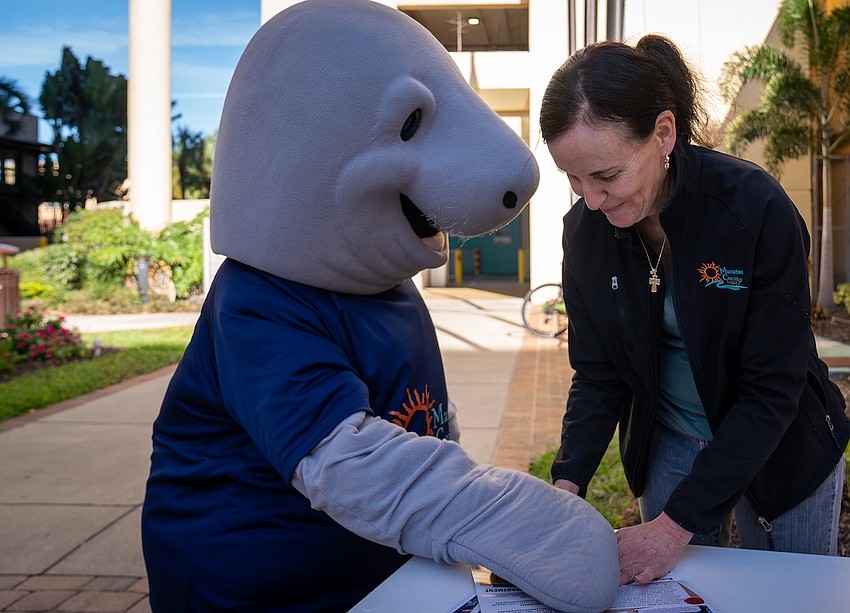
“The most common questions are [about] trash pickups,” Garrison says, like when residents’ scheduled pickup days are or what to do about missed pickups. “They want to know about permits. They want to know about road closures.”
Currently, it is too soon to say if Cortez has reduced call volume, according to Garrison, who notes the chatbot came online around the same time as county changes in trash pickup, so many of the questions have centered around that.
To find answers to questions, Cortez combs the mymanatee.org website. “We have thousands of [web] pages,” Garrison says, and “to find something can be really hard, and sometimes you don't even know what to search for… that's where Cortez comes in, and it's really user-friendly.”
So far, the chatbot has provided answers to 96% of the questions asked.
“Only about 800 times did Cortez answer, ‘You need to call 311,’ so what that means is the majority of times, when someone is typing in a question, it’s answering,” Garrison says. “The vision for this phase one of Cortez is that people can self-solve problems.”
Having Cortez answer questions enables staff to handle “things that we need an empathetic customer service representative for,” says Garrison.
Over time, staff members will feel like they “don't have the same boring, repetitive call every day,” Garrison says. They will get “challenging questions that give [them] more purpose behind [their] work.”
The next phase of Cortez will enable the chatbot to open tickets, Garrison says.
For the first year of chabtbot Cortez, the county paid $26,400, according to Manatee County Government spokesperson Bill Logan. For the second year and every year thereafter, the annual cost will be $15,900, Logan says.
“This is not about replacing human judgment,” Garrison says. “It's all about expanding what we can do and being better at serving the public, [so] that we can create a much more customer-focused experience. This technology can let us do that.”
— Elizabeth King
Use of AI: Naples-based nonprofit veteran Sophia Shaw and Miami-based Adam Wolford, who has expertise in technology and business strategy, launched PlanPerfect to help small and midsized nonprofits create and track strategic plans. The AI-assisted software uses survey data, strengths analyses and other information to build customizable and measurable strategic plans with clear goals and objectives.
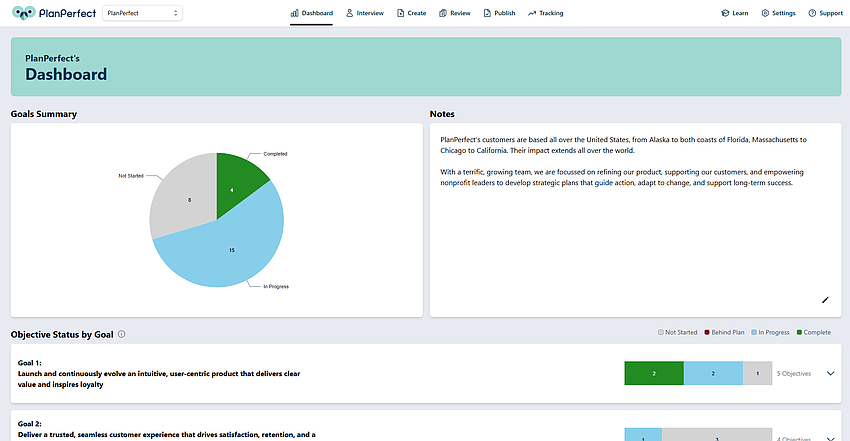
Many small and midsize nonprofits lack a strategic plan or have found creating one to be challenging, time consuming and expensive. The software is helping to change that, and since its launch in January 2025, PlanPerfect has grown to more than 35 paid users.
“It has given them a really fresh opportunity to put their own voices into their plans,” says Shaw. “Previously, either they had fallen into the camp of having their consultants’ voices — if they could afford one — in their plan, or just not having plans because it felt too overwhelming. It’s been really wonderful to see people really owning it.”
In terms of impact, they’ve already seen organizations launching capital campaigns with their new strategic plans and ability to track metrics in hand. PlanPerfect’s first client, Prairieland Adaptive, grew from a brand-new organization created to expand access to adaptive sports for individuals with physical disabilities and visual impairments in Central Illinois to hosting its first-ever expo, with 139 attendees from 70 communities across three states.
“In our second year, we’re really thinking about scale and how to get this out to more people, so that it can continue to grow both as a business, but more importantly, in the impact that it has for our clients,” says Wolford.
Shaw and Wolford are also expanding the software’s capabilities to provide assistance with enterprise risk management and resilience planning, along with strategic planning. “A lot of people are dealing with the changing tides of funding and different macro factors,” says Wolford. “So trying to provide a tool that allows you not only to plan, but also plan in a way that is resilient to change, was really important to us.”
—Beth Luberecki
Use of AI: Ballenger Landcare is on the cutting edge when it comes to mowing the lawn, even in the most challenging Florida landscapes.

In November, the commercial irrigation and landscape specialist rolled out its new robotic, remote mowing service: a fleet of highly-rated RC Mowers. These mowers are equipped with navigation sensors and remote-monitoring capabilities. These autonomous mowers help Ballenger Landcare’s lawn specialists navigate even the most difficult terrain, from steep slopes to containment berms to uneven ground, says Mark Ballenger, owner of Ballenger Landcare.
“This service combines human ingenuity and care with robotics to result in better health for your lawn and for the humans near them,” Ballenger says. “Our technicians conduct on-site assessments to map the property’s lawn, slopes, and any other obstacles. Once the parameters are defined and the mowing area is configured and programmed, our electric-powered mowers reliably operate on a defined schedule.”
The mowers not only improve the overall health of even the most difficult lawns, but also eliminate safety concerns that come with having to navigate a traditional lawn mower across steep or hazardous areas, or near traffic, Ballenger says. The electric mowers also leave a much smaller environmental footprint, operating without the noise and exhaust fumes that come from traditional gas-powered mowers.
That means that Ballenger Landcare’s robotic mowing services are able to work outside Florida’s established noise level restrictions between the hours of 10 p.m. and 7 a.m.
The smart-automation mowers also minimize overlapping, reducing working time, energy consumption and maintenance costs, Ballenger says. In Florida’s extreme environments, frequent mowing helps maintain turf health by reducing turfgrass stress and encouraging strong root growth.
In addition to safety and efficiency, autonomous mowing has also been scientifically proven to improve the health of Florida lawns, the company says. A 2023 study from the University of Florida’s West Florida Research and Education Center found that robotic mowing of St. Augustine grass, which is among the most common species found in Florida, resulted in greater overall turfgrass quality compared to conventional lawn mowing. According to the study, robotic mowers helped enhance green cover from the months of November to April and also resulted in greater turfgrass uniformity.
“The addition of robotic mowing services is another way Ballenger Landcare stands out in every aspect of landcare management services,” says Ballenger. “It’s an ideal solution for the majority of commercial properties throughout the greater Tampa Bay area.”
—Anastasia Dawson
Use of AI: Most people have heard of search engine optimization, better known as SEO. Going back to the 1990s, SEO is essentially what entities, anything with an internet presence, need to do — and be good at — to be on the first page of search engine results.
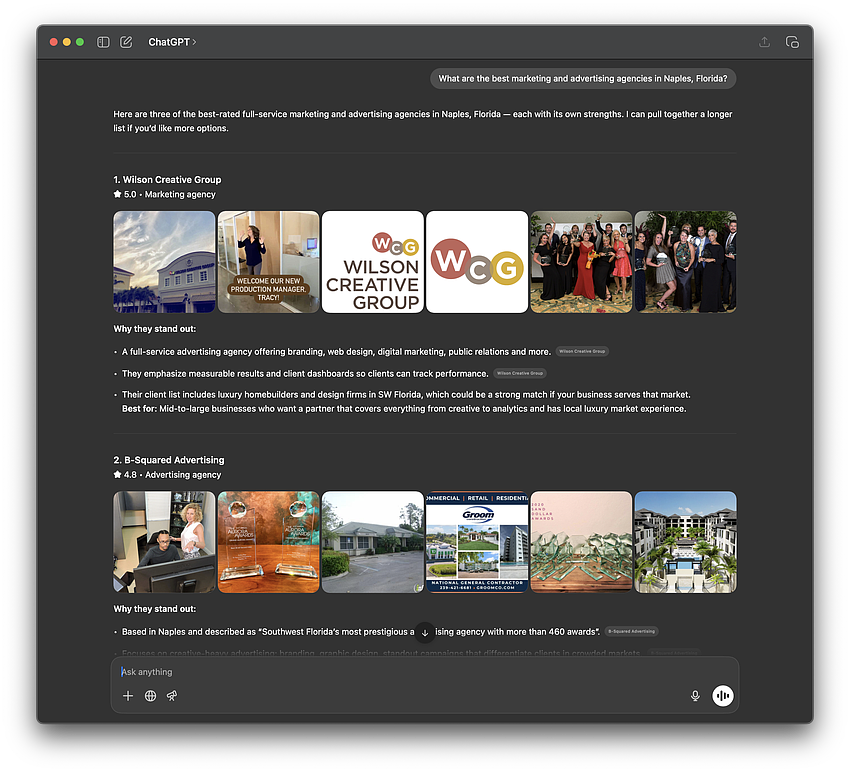
Now, in the age of AI, there is generative engine optimization, or GEO.
And Wilson Creative Group is at the forefront of bringing the service to clients. A full-service advertising and marketing agency, the firm announced in November it has begun rolling out a GEO service for clients. It’s like SEO — but, instead of Google or Bing, it’s designed for platforms like Google AI Overviews, ChatGPT Search, Perplexity and Bing Copilot, the firm says. In other words, the company adds, it’s a shift from optimizing for algorithms to optimizing for intelligence.
And, like SEO, the goal is that when someone searches for something in one of those AI platforms, the WCG client will be at the top of the list.
“Our goal here has always been to adapt or die,” says WCG President and CEO Peggy Wilson. “We want to stay ahead of it and master it to make sure our clients are ahead of this.”
Because AI and search bots need time to learn, index and build on a site’s content environment, WCG, in the statement, says “GEO functions as an ongoing service, continually refining visibility as algorithms evolve and user behavior shifts…the service is especially valuable for industries with strong competition for digital visibility and where expertise and authority are critical.”
“By implementing GEO in collaboration with our clients, we're helping them understand that AI discovery is now central to their marketing strategy,” WCG Senior Account Manager Gabriela Rivas says in the statement. “Together we're positioning them to capture opportunities their competitors are still overlooking."
Wilson declined to say how much WCG is investing in helping clients with GEO, adding for now it’s more of a resources investment, with two people from the firm’s digital analytics team working on it. The firm has looked into buying some AI GEO subscriptions, but so far, she says, those are cost-prohibitive.
Part of the work will be not only developing internal expertise but client education, in explaining the value of GEO. “Just like SEO, this will take time,” Wilson says. “It’s not something that’s going to happen overnight. It’s something we’re going to be scaling up. We’re excited to be on the front lines of this.”
—Mark Gordon
Use of AI: After piloting an artificial intelligence platform called Profitmind to scale business decision-making, Bealls began deploying the program companywide in September. The company used Profitmind to identify weekly profit drivers and monitor real-time financial impact of merchandising and inventory decisions, according to a statement.

“Bringing Profitmind’s AI into our planning process is like adding rocket fuel to the way we make decisions,” Bealls Chairman and CEO Matt Beall says in the statement. “It’s constantly crunching numbers from inside our business and from the market so we can zero in on the best opportunities, how much to spend and where to spend it.”
In addition to speeding planning cycles, officials say implementing Profitmind will raise forecast accuracy, maximize inventory productivity and free up teams from manual analysis so they can perform higher-value work.
“For our planning teams,” Beall says, “it means less time buried in spreadsheets and more time thinking big, being creative, and staying ahead of what our guests want.”
Profitmind deploys AI “agents” to analyze areas like competition, pricing, promotions, inventory, planning, assortment, strategy and overall coordination/management.
“Adopting an Agentic AI operating model lets retailers scale expert decision-making,” Profitmind co-founder and CEO Mark Chrystal says in the statement. “Our platform turns complex data into prioritized actions and measurable outcomes. That combination is what moves a planning team from analysis to impact. Bealls is leading the way by using Profitmind to move into this new Agentic AI era.”
Companies that use Proftmind include other national retailers like Kirkland’s and Batteries Plus, a spokesperson for Profitmind says.
Implementing Profitmind typically takes one to two months, with a multimillion-dollar impact to users’ bottom line, according to the statement. The average customer reports 21% revenue growth; 14% profit increase; payback within the first month; and 30 times the return on investment, according to Profitmind. Bealls did not disclose the investment it made in the product.
—Elizabeth King
The past year split the AI market into two groups: companies that transformed their operations with AI, and companies that collected expensive AI tools.
Looking at Gartner's Hype Cycle (graphical representation of a technology’s maturity), GenAI has descended into the "Trough of Disillusionment" phase, while Agentic AI sits at the "Peak of Inflated Expectations" phase. This positioning directly correlates to the many headlines we’ve been reading throughout 2025: eight out of 10 companies now use GenAI, yet some 80% of them experience no measurable impact on cost reduction, operational efficiency or competitive advantage. (GenAI, or Generative AI, creates new content, from music to images, through learning patterns utilizing massive data, while Agentic AI is a system capable of making autonomous multi-step decisions and taking action.)
In short: The technology works, but most implementations fail to move beyond expensive experimentations.
Certain GenAI applications have proven their value and therefore experienced a massive adoption cycle. For example GenAI copilots (e.g. Microsoft’s 365 Copilot, OpenAI’s ChatGPT, Anthropic’s Claude, etc.), AI-powered meeting note takers (e.g. Fathom, Granola, etc.) are secure internal alternatives to ChatGPT for document analysis. Because these solutions are horizontal, meaning they are general-purpose software products that cover a wide range of tasks, they don’t require a lot of change management and are therefore easy to implement for companies.
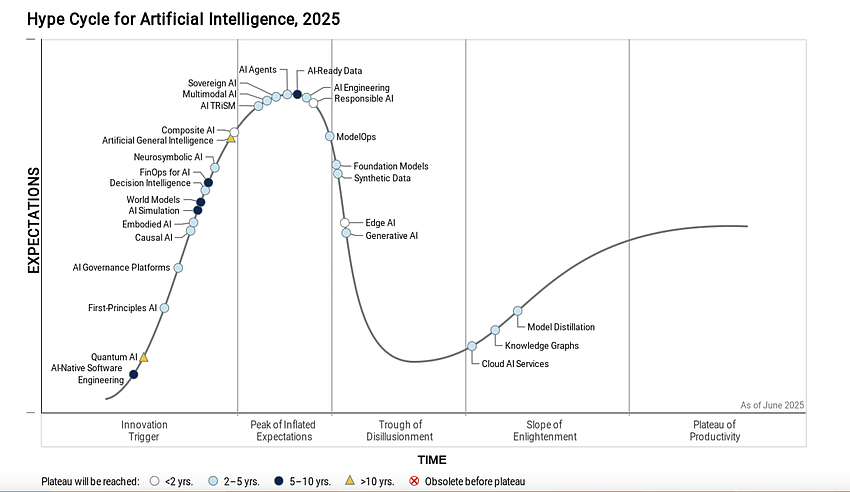
Hence, nearly 70% of Fortune 500 companies have reportedly deployed such tools, enabling employees to reclaim 15-30 minutes daily on routine tasks.
Although these tools create real efficiency gains, they don't fundamentally change how companies operate or compete. In other words, what makes your business better or different if all of your competitors are doing the same thing?
The most critical mistakes are technology-first implementations. Executives purchase AI tools, then ask "where can we use this?" instead of identifying inefficient business processes that AI could fundamentally reimagine. This produces AI bolted onto legacy workflows rather than workflows redesigned around AI capabilities, and leads to minimal efficiency gains and frustrated employees who view AI as additional work in place of genuine operational improvement.
Secondly, companies treat AI deployment like traditional software deployment. Executives rush solutions into production without rigorous evaluation frameworks, proper human-agent collaboration design, or ongoing performance monitoring. This causes users to encounter "AI slop," which are low-quality outputs that erode trust faster than technology can deliver value. Without continuous refinement and accountability structures, even well-designed systems fail to deliver operational value.
Finally, companies underestimate the organizational transformation required. Less than a third of AI initiatives have direct CEO sponsorship, meaning most efforts lack executive authority to drive real change. Siloed AI teams develop solutions disconnected from business operations and frontline needs.
The organizations that succeeded in 2025 approached AI differently. They selected strategic business processes, reimagined them around AI capabilities and built cross-functional teams with clear accountability for business outcomes rather than technology deployment.
Agentic AI currently sits at peak hype. Only a small fraction of organizations have deployed it, mostly in limited pilots. But this technology represents the real breakthrough. Unlike reactive copilots, agents monitor systems, trigger workflows, coordinate across multiple steps and execute complex business processes with minimal human intervention.
For 2026, expect controlled expansion rather than revolution. Organizations that successfully deployed vertical AI use cases will begin automating entire workflows like order processing, compliance reviews, customer onboarding and much more. The roughly 80% still struggling with basic copilot ROI will chase agentic AI and repeat the same expensive mistakes at a much higher cost and faster speed.
The reality is mistakes are inevitable with AI implementations and every company will make them. But the cost of those mistakes escalates with every month of delay. The learning curve is steep, the technology evolves rapidly and competitive gaps widen daily as AI-native operations pull further ahead.
The question isn't whether to invest in AI transformation. It's whether you'll learn from others' million-dollar mistakes or fund your own. What's your organization's real AI maturity? Don’t think about the number of tools deployed, but rather the business processes you've fundamentally transformed. If that number is close to zero, the gap is already expensive.
Vladimir Ljesevic is the managing partner and co-founder of CMPSE (Compose), an AI transformation consulting firm based in Sarasota.
Use of AI: Future Bylt uses AI for everything from simulating design to aiding in hiring. The company launched in October and is planning to grow its reach and staff in 2026.
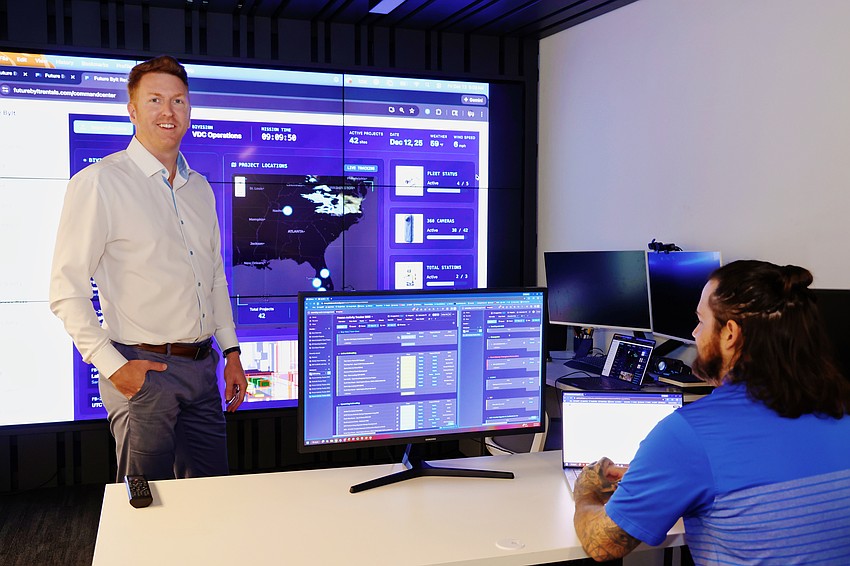
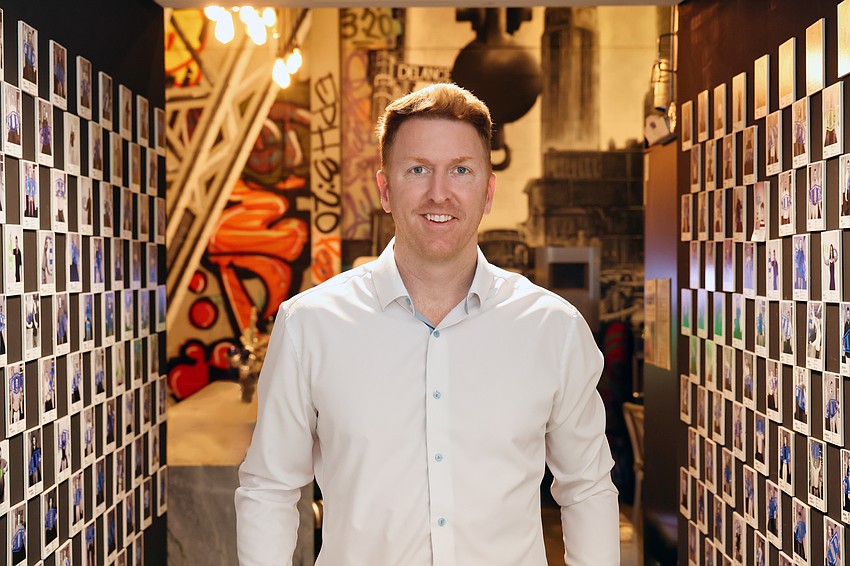
At the helm of Future Bylt is President Brett Diamond, who is also a principal at Naples-headquartered DeAngelis Diamond.
“We wanted to have a company that was not an internal [division] of a construction company,” Diamond says. “We wanted to have a full-on focused tech company that happened to serve the construction industry.”
At first, Future Bylt is just serving DeAngelis Diamond, but the goal is to open up its services to outside companies in the industry that are not competitors, like residential homebuilders; DeAngelis Diamond specializes in large-scale commercial projects.
One way the company is using AI is to develop its own computer programs. “We're exploring how to build our own internal web applications using AI,” Diamond says. “We have a few working prototypes of internal software pieces or web apps that we've developed for our teams” that are in beta form.
The company also relies on technology to map job sites. Future Bylt has five people dedicated to VDC, or virtual design and construction. They develop digital versions of job sites before the jobs begin, so the company can walk through its projects virtually and look at how pieces are connected, Diamond says. Making any changes in virtual form helps with efficiency because trying to make alterations in the field could push the schedule back, according to Diamond.
“In construction, schedule is the biggest thing. You live and die by the schedule,” Diamond says. “That's where your money flows from. If you're going over schedule, you're going to burn cash. If you go under schedule, you can have savings for you and your clients."
Those on job sites are also using AI. If crews need to find something like the spec for a door, the process of searching documents and databases can be lengthy, Diamond says. Future Bylt has partnered with a few companies to test AI that can search everything from contracts to drawings. This saves time and in some cases, reduces calls to the general counsel with questions about contracts, Diamond says, now that staff can search contracts more easily, with AI distilling legalese into layman’s terms. Future Bylt is using that AI technology “on a few jobs now,” Diamond says in mid-December, and will be rolling it out to more soon.
It has also deployed technology including robots and lasers to draw layouts on ceilings, walls and floors. The company is investing in a 3D printer that can pour walls as well.
“We have a good relationship with a hedge fund that basically focuses on robotics,” Diamond says, which is how Future Bylt got connected with the 3D printing startup. The hedge fund pitches startups with new inventions out of Ivy League schools or incubators to his team, says Diamond, who notes the 3D printer came from a startup tied to a Princeton student.
On the human resources side, Future Bylt has been using AI that can sort through applications and recommend who recruiters should look at first based on the content of their resumes. In 2025, DeAngelis Diamond received 10,000 applications for 125 jobs, Diamond says.
Future Bylt is also using AI to help select teams internally for projects. It can identify who would be “the right person” to be the superintendent or project manager for “that church or that hospital or whatever building you're building,” Diamond says. AI can look at location, project criteria, start date and resumes to identify who would be the best fit.
In the same fashion, Diamond says, Future Bylt is looking to AI to help find the best subcontractors for its projects.
The goal is to “deliver a better end result to the client," Diamond says, "by utilizing AI from who we hire internally as well as externally."
Overall, the company sees AI as a way to provide better service for customers. “Essentially, our goal is to make the projects faster, safer and more cost-effective for the client,” Diamond says.
In addition to helping clients, AI improves the experience of employees and subcontractors. If the team is “using AI that makes their job easier, they're going to be happier; we're going to retain them longer,” Diamond says. “For our trade partners, they're going to enjoy working on our jobs more….That's what we're trying to do as well, not just make our team happy, but make the hundreds of people who are on our job site enjoy being on our job site.”
—Elizabeth King
Use of AI: The Lakewood Ranch-based company appointed two executives to its leadership team in November in newly created roles that center around artificial intelligence.

Shane Luke was appointed Roper's senior vice president of AI, while Edward Raffaele was named vice president of AI engineering. The duo will focus on advancing AI capabilities across the company's portfolio of vertical software businesses to bring product innovation and long-term growth, according to a statement.
"AI represents a significant opportunity to strengthen the value our businesses deliver to their customers and drive higher levels of long-term growth for Roper," Roper Technologies President and CEO Neil Hunn says in a statement. Roper designs and develops vertical software and technology-enabled products for a variety of niche markets.
Luke and Raffaele possess “deep expertise in AI strategy, development and implementation” that will help the company's businesses “amplify their current AI capabilities,” Hunn says.
The duo came to Roper from Workday, a cloud-based platform for managing HR, finance and AI agents. Luke had been vice president and general manager of AI and machine learning for the California company, while Raffaele was vice president of AI.
Before Workday, Luke and Raffaele both held leadership positions at Nike; co-founded BlueMesh, an AI-powered enterprise collaboration platform; and worked for Recon Instruments, a technology company producing “smart glasses” acquired by Intel.
Roper Technologies is not alone in its decision to add AI experts to leadership positions. St. Pete-based banking and financial services giant Raymond James appointed an head of AI strategy in September. In the newly created role, David Solganik will help shape the nearly $13 billion firm’s AI strategy by identifying cross-business opportunities where advanced analytics, machine learning and generative AI can drive growth and elevate the client experience, the company says.
—Elizabeth King
Use of AI: The Tampa-based commercial real estate firm Franklin Street began using artificial intelligence about two years ago.
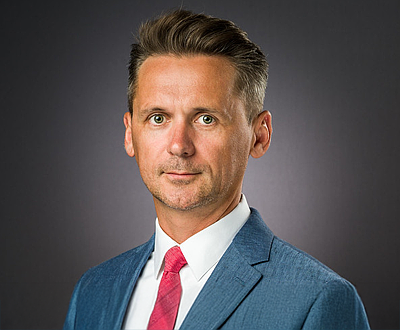
The implementation was driven by Tom Rybak, who wanted a system that avoided the “wow factor” of AI and instead worked with firms to address the specific needs of the company.
“There's a lot of stuff out there that's, ‘oh, wow, this is cool’” but then you use it once and then you never use it again,” he says.
Franklin Street says it is employing AI in several ways, utilizing multiple products, including Copilot, Perplexity and Henry.AI. And it is using it across job functions, from automating processes for broker teams to helping corporate employees with their daily tasks.
Rybak says its systems currently automates up to 20% of the firm's tasks, among them writing leases. That's a task that would normally take four to six hours to write an 80-page document.
AI, at Franklin Street, reduces it to 15 seconds.
Not only is the work done faster, creating efficiencies and allowing brokers to focus elsewhere, but there are cost savings. Take the leases as an example, again. By producing them using an AI trained program, Franklin Street can hire fewer lease administrators, leaving just a couple of people to oversee large portfolios.
A self-professed tinkerer, Rybak began looking into how Franklin Street could integrate AI about two years ago. The idea was to find how it could be more efficient, which meant identifying specific needs and looking at how AI could offer some sort of solution.
AI can solve really specific things, Rybak says, taking complex projects and tasks to a certain point and then letting humans take over.
“That's kind of how I went about it,” Rybak says. “And now we're dialing those pieces in, identifying the partners we're working with, and what solutions we want to tackle with AI.”
—Louis Llovio
Use of AI: Earlier this year, Hillsborough County Clerk of the Circuit Court and Comptroller Victor Crist turned to the USF Federal Credit Union looking for a bit of help.
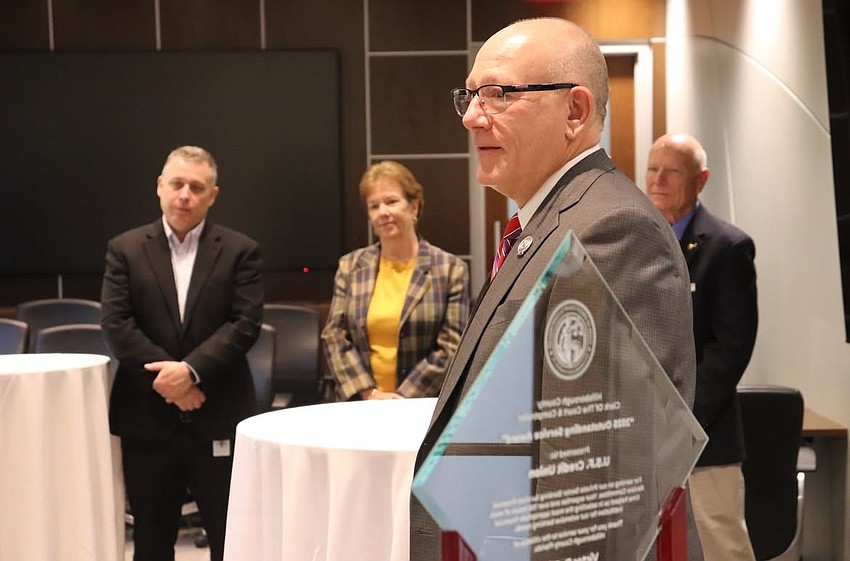
The county official wanted the credit union to review banking documents and help the clerk's office evaluate its banking service agreement.
The credit union put a team of 10 people from its New Tampa branch to work on analyzing more than 1,200 pages of the county’s banking documents, according to a statement.
The credit union employed AI for the task.

What came out of the project was a 100-page detailed review — and, notably, $6 million in savings.
According to a statement from the credit union, because of its review, the county made a significant change in its banking relationships, resulting in an estimated $1 million in annual savings over six years.
The team on the project solved the issues by, what Rick Skaggs, the institution’s president and CEO, calls “applying their expertise — and emerging technology.”
The human capital was also used to double check the work of the AI platform. Team members went over every AI-generated score, reference and citation to make sure it was accurate, fair and verified to ensure accuracy and fairness.
Given the project’s savings, Crist presented the credit union with a 2025 Outstanding Service Award. It honored the team and Skaggs as well.
—Louis Llovio
Use of AI: Almost three years after Hurricane Ian, Sanibel Island remained in recovery mode. In spring 2025, some island residents and business leaders came to Mark Bole and the Ain Technology & Design Hub at Florida Gulf Coast University seeking help ensuring they were using the best data for decision making. Bole built a prototype dashboard that weekend.

Bole and his FGCU students, along with the Sanibel civic leaders, spent a month and a half using AI to collect and analyze data from Lee County, the Sanibel and Captiva Islands Chamber of Commerce and other sources. They tapped AI to build a website, and Sanibel Solutions was launched on May 31, offering a dashboard that tracks and analyzes data on the island’s recovery across economic, tourism, housing and other indicators compared with pre-Ian baselines.
“When people have different views on the recovery, it can create problems,” says Bole. “So when you have the data that says here’s what’s really happening, you spend less time debating where you are and more time on what’s the next decision you’ve got to make and the real problems you’ve got to solve. I think it gives clarity, and that is really, really important.”
When it comes to the island’s all-important tourism sector, the dashboard reports (as of December) that 75% of lodging units are now open, 72% of the island’s restaurants have reopened and causeway traffic is at 82% of pre-Ian levels. “They’re not 100% there, but they’re really making good progress — and have got data to back it up,” says Bole. “Sanibel is ready for visitors.”

He and his students are now building on the dashboard’s success by offering free AI workshops for island businesses. They’ve done four workshops since June with more than 350 attendees; one six-hour workshop had 40 attendees from businesses and 40 attendees from nonprofits.
“Businesses are still not where they were before Ian, so how do we help them become more productive and efficient and grow revenue using AI?” says Bole. “Small businesses don’t understand how to apply AI, and Southwest Florida needs to catch up quickly.”
Throughout the whole experience, the students at the Ain Technology & Design Hub have been developing real-world, first-hand experience in leveraging AI to solve common business issues. “They, as a team with AI, can attack any problem that comes our way,” says Bole.
He sees the potential for the Sanibel Solutions model to be applied elsewhere after a storm. “We’re focusing on Southwest Florida, but I can see us expanding to other regions in Florida or even in the Southeast, and possibly nationally if we can build the right model,” he says. “And it may become important to look at all of this even before you have a hurricane or other disaster, as it may make it helpful for recovery efforts afterwards.”
—Beth Luberecki
Use of AI: Rumble rolled into the AI market in a big way in 2025.

The video platform company, billing itself as a freedom-first, free speech entity against competitors that suppress content, has built a company with $2.26 billion in market capitalization in roughly a decade. It went public, through a merger with a special purpose acquisition company known as a SPAC, in 2022. It moved its headquarters from Toronto to Longboat Key in early 2023. While it hosts a variety of content and also handles cloud services, Rumble is known for its conservative leaning customer-base, including hosting President Trump’s Truth Social network. The company has some 47 million monthly active users and has built an advertising ecosystem that can access over a billion ad requests per day, it says.
The firm’s gateway to AI comes through an acquisition it announced in November. The target? German AI infrastructure giant Northern Data AG.
Rumble, in a Nov. 10 statement, announced the two firms had agreed on merger terms. The all-stock deal, expected to close in the second quarter this year, is for $767 million. Rumble first disclosed its pursuit of Northern Data in August, reports Reuters, seeking control of the German company's Taiga business and its large-scale data center arm, Ardent.
The deal has two other components, in addition to the AI. One is cryptocurrency firm Tether agreed to purchase $150 million in GPUs from Rumble over a two-year period following the closing of the Northern Data purchase. Tether announced a $775 million investment in Rumble in February. (GPUs are specialized chips that can handle the massive data needs for AI.) Tether also made a $100 million advertising commitment to Rumble as part of the deal. Rumble will also acquire 22,400 Nvidia GPUs when the deal closes, according to Reuters.
Yet the real driver of this deal, Rumble CEO Chris Pavlovski says, is the ability to take a leadership position in the rapidly-changing and ultra-competitive AI infrastructure marketplace. Northern Data has nine data centers, and, Pavlovski says, when those hard assets are combined with the Nvidia GPUs, it will position Rumble as an international player in AI infrastructure, “with Northern Data's footprint across Europe and U.S. complementing Rumble's prominence in North America.”
“The future of Rumble isn't about competing within the old systems,” says Pavlovski, in part, speaking on a Nov. 10 investor analyst call on the Northern Data deal. “It's about redefining with something better.”
“Collectively, this positions Rumble as one of the most important disruptors in technology, spanning video, cloud, AI and payments, all anchored in freedom, privacy, independence and resilience,” he says, adding the firm’s AI advances will allow it to “fiercely challenge the likes of Microsoft, Google and Amazon."
— Mark Gordon
Use of AI: Visit Tampa Bay enlisted tech companies Satisfi Labs and Granicus to power its website chatbot and customer relationship management integration. The combination has enabled the organization to help, track and market to potential visitors.

Visit Tampa Bay and Satisfi Labs trained the chatbot, which can also link to other AI agents, for local attractions, including Zoo Tampa and the Tampa Bay Rays, according to a statement from software company SimpleView, which is part of Granicus.
“This connected network creates a more efficient, scalable system that delivers the right information to the right visitor while reducing content management work” for staff, the statement says. “Insights from chat queries feed directly into the CRM, allowing for targeted campaigns. The information gained from the interactions helps partners better prepare for any influx of visitation, creating a more seamless experience for travelers.”
About 45% of queries to the chatbot have come in outside of normal business hours. The chatbot invites people to ask about places to stay, eat and drink, events and also has a list of suggested questions to ask, such as “What events are coming up?” or “What are some recommended restaurants?”
“Think of the money you’re losing by not being able to answer those questions,” Visit Tampa Bay Chief Marketing Officer Patrick Harrison says in a statement.
“The whole point really was to find a way that visitors and locals could seamlessly access what was going on,” Harrison says, “whether it's an attraction, sports event, where to eat, where to go, or what to do — and make sure we could track interactions and see that information.”
— Elizabeth King
AI is everywhere.
It can suggest subject lines, surface trending topics or draft a week’s worth of social media content. But technology alone doesn’t drive results. The companies that win pair insights with human judgment, using AI to streamline work, clarify messaging and free teams to focus on more complex matters.
Here’s how Southwest Florida business leaders can put these principles into action:
Personalization isn’t just inserting a name; it’s delivering the right message to the right audience at the right time. AI can analyze past behaviors, engagement patterns and preferences to surface insights, but the real impact comes from pairing those insights with strategic decisions.

For example, a Gulf Coast resort might use AI to identify couples who previously booked spa packages, families who visited during the holidays or guests who engaged with private dining options. AI can suggest these segments, but a trained professional must determine which offers to prioritize, how to frame them and the timing of outreach. Hospitality professionals then add small, thoughtful touches — like including images in promotions that reflect a guest’s favorite spa treatment, referencing a prior review or noting a special anniversary — to turn marketing into memorable, personalized moments.
Executives who combine AI with strategic thinking not only drive engagement and conversions but also strengthen loyalty with clients, partners and employees. In competitive Gulf Coast markets, this level of targeted personalization can differentiate a brand and ensure resources are invested where they will have the greatest impact.
Everyone is publishing content, but most of it gets ignored.
The goal isn’t quantity: it’s clarity, relevance and actionability. AI can help marketers process large datasets, generate drafts or suggest trending topics, but expert judgment ensures the content tells the right story.

Take a Tampa commercial real estate firm, for instance. The team might ask AI: “Analyze vacancy rates, lease trends, new construction and market projections and draft a preliminary market report.” Digital tools then compile the data into a structured draft, highlighting patterns and potential opportunities. From there, leaders determine which findings are most critical, add local context and design charts or infographics to make the report actionable for clients.
On social media, the firm could ask AI to surface trending real estate topics or generate draft captions, but employees set the tone, craft calls-to-action and schedule posts strategically. By combining AI efficiency with professional expertise, the firm produces content that rises above the noise, engages its audience and drives measurable results — AI handles the data; humans ensure the story lands.
The most effective teams avoid getting bogged down in repetitive tasks. AI can automate work such as client newsletters, status updates, reporting or basic social posts — freeing employees to focus on high-impact activities.
For example, a midsize law or accounting firm might ask AI: “Draft a first-pass client newsletter using these recent updates, notes and industry headlines.” AI can assemble the structure, summarize routine updates and generate placeholder copy. From there, senior staff refine the message and tailor the content to key clients. AI handles the repetitive drafting; humans ensure accuracy and market context.
By combining automation with expert insight, teams can prioritize growth initiatives over busywork. By strategically offloading repetitive tasks, organizations can allocate talent where it drives the greatest value, whether that’s deepening client engagement, exploring new markets or developing innovative marketing or social media campaigns. Over time, this doesn’t just improve efficiency — it transforms how teams operate, making them more agile, responsive and strategic.
Don Silver is COO at BoardroomPR. He has 30-plus years of public relations and national marketing management experience. Rachel Sharpe is an account director at BoardroomPR. She specializes in media relations, communications strategy and account management. Based in Fort Lauderdale, BoardroomPR is a statewide public relations and integrated digital marketing agency.
Use of AI: Naples-based Premier Sotheby’s International Realty was recognized in October with a major industry award for using a technology created in house by an employee — driven as much by anxiety as a desire to find a solution.
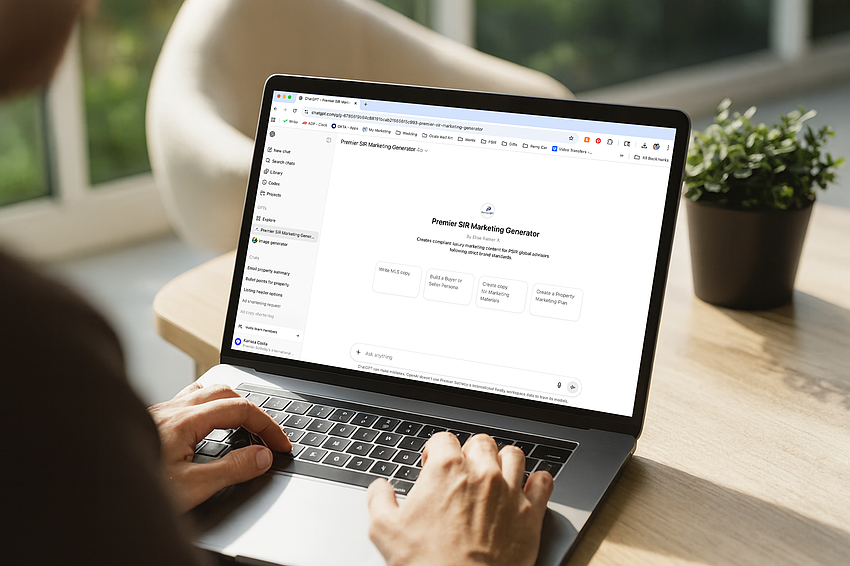
Her name is Elise Ramer. She is the firm’s vice president of communication and public relations.
About a year and a half ago, Ramer was tasked with helping the firm come up with AI solutions that would help it do business more efficiently.
As head of the communications team, her focus was on how to improve the messaging that flowed in and out of the firm every day. Ramer began to look around at what was being done in the real estate space and found there wasn’t anything that fit with what she wanted and the firm needed.
“So I started playing around with it,” she says
She was lucky enough to have a colleague at a Sotheby’s International Realty brokerage in Hawaii who was also just starting to play in the space.
She connected with the colleague, Debbie Ridenour, and they talked for a while.
Ridenour sent Ramer examples of work she’d done creating buyer personas.
Ramer, who had worked with her IT department on the project for three months and found its approach would not have yielded the solution she imagined, asked Ridenour how she did it.
The answer was simple. “She goes, ‘Elise, I’m not a coder. I’m a marketer just like you.’”
It turns out the solution was using ChatGPT.
Rather than having to create code like one would when programing a system, ChatGPT allowed her to use hashtags and formatting to write the prompts to create a custom GPT to answer the questions the way she needed it to. (GPT stands for Generative Pre-trained Transformer. Generative because it generates human-like text and is pre-trained on massive datasets, according to Google AI Overview. The transformer is for a specific neural network architecture that can understand context and create responses.)
“So, I took a little bit of her framework and how I wanted it to behave, and then I put it on steroids,” Ramer says. “What she had built just did one thing, and I wanted it to do 100 things."
Ramer spent two months building (and another two months training her team on) what is called PremierGPT, an advisor-first platform built to give Premier’s Realtors and staff “faster, smarter and more creative marketing capabilities,” according to the firm.
The AI tool is able to generate “brand-consistent content” in seconds, including narratives on properties, social media copy, digital ads and email campaigns.
Premier Sotheby’s International says the platform drives efficiency and consistency “while empowering personalized storytelling for each property and customer.”
“There was a fire in my belly to make sure that I achieved the goal that my CEO had set out for me and our team and all of us,” Ramer says.
“It exceeded our wildest expectations with how much it is used, how efficient it is and how it has achieved the goal of increased efficiencies across the board.”
And in October it was rewarded with the Inman AI Award, given by the real estate industry publication and events company to “honor companies and individuals that are leveraging advances in artificial intelligence to change the game for the real estate industry."
— Louis Llovio
Use of AI: ONEai Health uses remote monitoring through wearable devices that transmit data to a platform that can detect trends and early risk signals, which are then sent to clinicians. Hospitals and doctors' offices hire the company for its remote monitoring services, and those entities can bill insurance and then pay ONEai Health.

Here’s how it works: Users have a smart ring, Apple Watch, Fitbit, phone or other device that sends “thousands of important signals” about their physical and mental health, ONEai Health CEO and founder Rob Fisher says.
“All of that information comes in, and the AI watches it,” Fisher says. “Our AI chatbot interacts with the patient in a very warm, conversational, not robotic way. So we begin to learn the patient, and when we start to see something is changing — and probably not for the good — we're able to dive deeper into what's going on for that person.”
ONEai Health has received almost 1 billion biometrics to date, Fisher says, and has millions of users in the pipeline for 2026.
A team of clinicians oversees the data and watches for changes. Fisher, a former chief nurse officer who helped launch the Michigan Stroke Network and has been involved in telehealth since 2005, says the idea is to prevent issues before they happen.
“We're not only impacting lives every day,” Fisher says. “We're literally saving lives on a weekly basis.”

Fisher relays the story of a military veteran and firefighter who had recently witnessed a suicide and was holding a loaded gun in his hand, which he shared with ONEai Health's chatbot.
“Because of what he had previously said in his messages, our AI recognized the sudden alert, the criticalness of the event, and alerted our team,” Fisher says. The team got in touch with the man’s therapist, and EMS and police “got to his house before he completed the act” of harming himself, Fisher says.
Often, people do not want to go into a doctor’s office, but they will talk to a chatbot. ONEai Health’s chatbot, Jennifer, is a critical piece of the infrastructure, according to Fisher, whose career included working the night shift at an ER, when he says he noticed some people would call the hospital just to have a conversation. To that end, he says, Jennifer was developed intentionally by the team, including Chief Medical Officer Dr. Richard Fessler, who is a neurosurgeon, with a "warm tone” along with humor. Jennifer often gets “endearing or complimentary" feedback, Fisher says.
ONEai Health monitors chronic conditions as well as behavioral health. Many people with a chronic condition like diabetes, stroke or heart failure also have an underlying behavioral issue, Fisher says.
In terms of chronic conditions, “we're predicting critical things” like an exacerbation of congestive heart failure days before people notice signs, according to Fisher.
The company’s studies have shown its system has produced dramatic results, including:
ONEai Health provides a “holistic view” of a person’s health, Fisher says.
“The doctor now has information that they can see that they never saw before,” says Fisher, who notes it is challenging to understand patients based on periodic visits. “Some [users] will say that they feel like [the platform] is an extension of their doctor.”
Through contracts with customers, Fisher says ONEai Health is active in more than 30 states, with 4.6 million people in the pipeline to receive its services in 2026. Everyone from doctors and hospitals to assisted living facilities have contracted with the company for its remote monitoring. Most insurance covers it once a doctor issues a prescription for the service, he says.
“If we can help anyone not fall through the cracks and prevent some of those crises that go unseen, or those changes that go unseen, and watch them every day,” Fisher says, “especially when they're most vulnerable — that's the entire goal.”
— Elizabeth King
Use of AI: Sarasota County Schools have had to enforce strong policies to maintain academic honesty and protect student data in the era of AI. But that hasn’t stopped the school district from leveraging the technology to communicate effectively and efficiently with its community.

In early November, the school district introduced “AlwaysOn” — a 24/7 support chatbot on the school district’s website intended to field questions from families and community members. The AI-powered chatbot is intended to be used like a virtual help desk, responding to any questions using only content pulled directly from the SCS website.
“That means the information it provides is not only accurate, but also specific to our district’s schools, programs and policies,” the school district says in a release.
AlwaysOn provides support in more than 30 languages, helping families find answers in their preferred language and allowing the school district to see which languages their families are using at home.
The AI-powered chatbot can be accessed any time through a popup on the school district’s website, typically on the bottom right corner of the screen, and assists visitors with common questions even outside of school hours. Users type in a question, as you would in a search bar, and the chatbot responds with relevant information or links to guide the user to the right answer.
Direct links and detailed responses are pulled from the SCS webpage for quick and easy access to information and, if the chatbot can’t fully resolve a question, AlwaysOn is equipped with smart routing to contact forms or staff members who can assist.
AlwaysOn is a time-saver for both community members and district staff alike, the school district says, by handling routine inquiries automatically.
“In addition to improving the user experience for families, AlwaysOn helps the district identify the most frequently asked questions and information gaps,” the school district says in the release. “This allows us to enhance our website over time based on real user needs.”
— Anastasia Dawson
Use of AI: A Naples hospital has turned to an AI platform to help detect heart attacks — sometimes 10 years before the first symptoms appear.
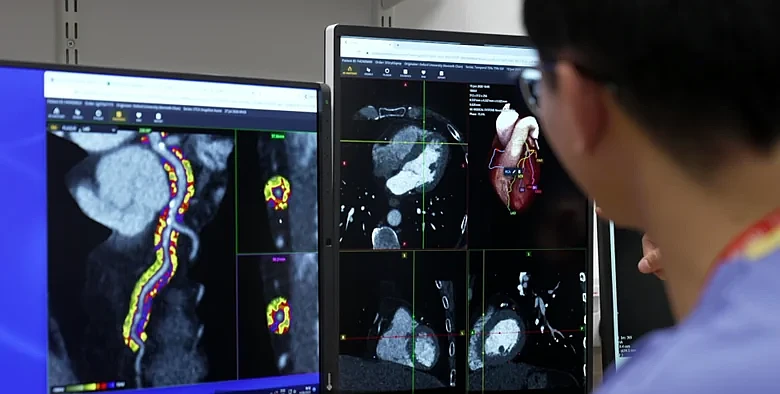
Naples Comprehensive Health’s Rooney Heart Institute is using a pair of AI-powered imaging technologies that identify signs of heart disease and can predict a patient’s risk.
The technologies, from Connecticut-based Caristo Diagnostics, are CaRi-Plaque and CaRi-Heart.
The CaRi-Plaque technology, NCH says, analyzes Coronary Computed Tomography Angiography scans, the first-line test for patients with chest pain, to identify high-risk plaque that may lead to future heart attacks.
And CaRi-Heart is able to “detect and quantify coronary inflammation, an early driver of heart disease, without waiting for patients to develop visible plaque.”
NCH, in a statement, says “current clinical pathways often fail to identify high risk patients by missing inflammatory disease activity and relying on plaque assessment alone.” What the CaRi-Heart Technology does is provide a risk score that allows doctors and their patients to understand how likely a cardiac event is. Sometimes a decade before symptoms appear.

The technology, says NCH, is widely used in Europe and is currently being reviewed by the U.S. Food and Drug Administration. (CaRi-Plaque, the hospital says, is “FDA-cleared.”)
Dee Dee Wang, Rooney’s section head of cardiac imaging, says in a statement that the hospital’s collaboration with Caristo “represents a new paradigm in cardiovascular medicine.”
“Doctors are used to responding to cardiac events after they happen. Caristo has the first clinically validated AI solutions that let us prevent heart attacks a decade before they occur.”
As part of the collaboration, every Rooney Heart Institute patient who qualifies for plaque analysis will have their CCTA scan analyzed by CaRi-Plaque.
NCH will also implement CaRi-Heart as part of a research program to give physicians the opportunity to include the inflammation-based risk score in their work.
The health care system is also launching a new preventive heart health service for people who “elect to proactively manage their health before any cardiac symptoms.”
The self-pay program, NCH says, allows anyone concerned about their heart health to be enrolled.
— Louis Llovio
Use of AI: To streamline processes and analyze materials in minutes that otherwise could take days.
Will Conroy, founder and president of Backstreets Capital was having lunch with two friends at the Vinoy in St. Petersburg when he was first exposed to the power of AI.
It was a Friday meet up for the group in 2023, one they do every six months. During the conversation one of friends asked if the others had heard about this new thing called ChatGPT.

When both said they he hadn’t, the buddy pulled out his phone and prompted the program to write a story about three middle aged men having lunch on a Friday afternoon together.
“And it did,” says Conroy. “In the span of about 30 seconds, it pumped out an amazing story. And we, the two of us who had not seen this before, looked at each other and were like, ‘Oh, boy, this is different.’”
Now, two years after the lunch, Conroy has adopted AI “every day in some form” at the real estate investment firm he runs in St. Petersburg. The firm's projects include The Nolen, a 23-story luxury condo tower under construction in St. Petersburg and Icaria a more-than 200 unit Tarpon Springs apartment complex completed in 2021.
One of its primary uses is for administrative and clerical purposes, the kind of jobs that are critical but time consuming, volume tasks he calls them.
The firm first began using AI to write letters and then to do baseline research into city and municipal codes. The firm also turns to AI to review budgets, produce renderings and create sales sheets, as well as for analysis of sites and development plans.
Backstreets Capital also uses AI to generate pitch decks for banks, lenders or city government officials. What AI does, Conroy says, is gather the information needed quickly and formats it far quicker than it would take one of his employees.
That doesn’t mean, people aren’t involved. Far from it.
What AI produces isn’t perfect, and humans need to review the materials, but it gets the firm, he says, “90-plus percent of the way we need to go in a very short order.”
“It's been an adjacent tool to human discretion,” Conroy says. For him, that means sitting with a one screen open on his computer to an AI program and another screen open to the city of St. Petersburg municipal code.
“It’s not a replacement. We still have to get in the code, and we still have to engage with people personally. But it can certainly — and does help us — with the background information.”
— Louis Llovio
Use of AI: Since launching earlier in 2025, Patriot Select has begun rolling out lower premium rates statewide and introducing AI into its underwriting, claims processing and risk modeling process, the St. Petersburg-based insurer says.

The result, CEO John Rollins says, is improved accuracy, reduced cycle times and increased operational efficiency.
“Our goal is to be the reliable, transparent property insurance choice for Florida families,” Rollins says in a statement. “We’re using technology to operate smarter — so we can pass those efficiencies back to our customers. Lower rates are just one way we’re delivering on that promise.”
The firm began implementing AI into its daily operations, with a goal to improve efficiency and service for policyholders and agents alike, in November.
An AI-powered chatbot on the Patriot Select website enables immediate claims reporting and real-time assistance for agents and policyholders. The company is also using AI to determine underwriting and risk. High-resolution aerial imagery and predictive analytics improve risk assessment, reduce fraud and strengthen underwriting precision, the company says.
AI tools are also contributing to the company’s growth and market insight by helping identify and qualify new agencies and customers that could join in Patriot Select’s ongoing expansion, the company says. “As Florida’s market continues to recalibrate, our focus remains steady—deliver sustainable, long-term value to our customers and agents,” Rollins says.
Patriot Select won approval to begin operating in the state April 14 from the Florida Office of Insurance Regulation. It began selling homeowner insurance policies through Florida independent agents in June.
Patriot’s approval was part of an effort by the OIR to increase the number of property and casualty companies operating in the state, with the goal of bringing stability to what has long been a tenuous insurance marketplace.
— Anastasia Dawson
Use of AI: Dan Lavender, CEO of one of more prominent senior living communities in Southwest Florida has long said he wants the organization, Moorings Park Communities, to be on the leading edge of technology, but not the bleeding edge.

Yet, Lavender and his team at Moorings Park balked at first in moving forward with a plan to incorporate AI into a new 24-unit complex on the Moorings Park Grande Lake campus, one of three the nonprofit operates in Naples. “For the longest time we resisted it,” Lavender says in a November interview, “because we thought customers wouldn’t want it.”
Turns out they did want AI.
Dubbed GardenView, the community opened in October. It has three key AI-infused elements. One is a smart home system with what the organization calls “elegant and discreet” overhead lighting that can detect falls, adjust for safety and track motion and sleep patterns. Another part is a wearable device, a pendant, that can detect falls, get help and enable hands-free access. A third element are smart speakers that, the organization says, “provide two-way communication with staff and support autonomy and engagement.”
The part that makes it all work, Lavender says, is that with this AI, the systems talk to each other and provide an avenue to analyze information together. “It will be constantly learning and reading data to keep our residents safe,” he says.

In a statement announcing GardenView, Tony Marques, vice president of technology operations at Moorings Park Communities, adds that with this AI program, “we’re able to predict care and outcomes before they become critical.”
With the potential of an older generation not embracing technology the way younger generations often do, there was a worry the AI would be underused, Lavender says. But in the first few months he’s been “surprised at how many residents adopted it quickly.”
The investment in the AI for GardenView is significant: It cost $500,000 for the technology implementation and is $200 a month per unit to lease, Lavender says. “We know we will need to get that cost to go way down,” he says, adding the plan is to start with GardenView and then potentially scale the AI to all of Moorings Park.
Like many other organizations in other industries, Moorings Park officials say while AI is a big advancement, it can’t replace human touch. For that part, GardenView utilizes a connection philosophy called Best Friends, an internationally recognized model it says “redefines care through the power of friendship.”
“Our relationships are the heartbeat of GardenView and the Best Friends approach,” Lavender says in the statement, “but technology is the quiet system behind that, connecting, protecting and informing our team. We think that this technology is going to contribute to our residents living a meaningful life and confidence for their loved ones.”
— Mark Gordon
Use of AI: Tampa contractor and entrepreneur Tommy Whitehead knows all too well that getting accurate estimates for a project can be one of the biggest bottlenecks in the construction industry.

So the 41-year-old decided he would do something about it. Whitehead, owner and president of remodeling contractor TomCo Solutions, has always had a brain for technology, so he began looking for an online, AI-powered program that would help his contractors get accurate estimates on projects.
When he couldn’t find one, they decided to build their own.
With help from his team at TomCo, Whitehead created AI Builder Company. It's a construction estimation tool, capable of taking measurements or reading blueprints and plans in a matter of seconds, comparing the number of fixtures to a cost database and turning out an accurate estimate for construction services in a fraction of the time it would take a contractor to complete the math themselves, Whitehead says.
Whitehead’s prototype can complete an electrical estimate in 19 seconds, he says.
“So if I want to redo my living room, I have to calculate the square footage of the flooring so I can buy new flooring tiles,” Whitehead says. “I have to calculate the linear footage of all the baseboards I’m replacing, the casing around my doors and windows, the number of light fixtures, number of outlets in a room, square footage of drywall, estimate the gallons of paint, all of that has to be calculated and it takes time to do it manually, plus your prone to errors and mistakes. It can take up to a few weeks to prepare a large estimate for a client, but this software can calculate all this information in a matter of seconds. That’s a huge win for the construction industry.”
Whitehead has always had a knack for learning the latest technology, and has become adept in working with AI himself — even teaching classes at local chamber meetings on AI prompting and engineering.
“We had a need for faster estimations and so I decided to find my own solution,” Whitehead says. “AI can’t pick up a hammer, but it can help with scheduling. It can help with product sourcing and it helps with all that paperwork that takes away valuable time and attention from our clients and job sites.”
AI Builder Co. works through visual detection, where a user uploads a PDF, the program scans the PDF and returns information. What Whitehead’s most excited about, though, is how the program is beginning to interface with architecture design software — going straight into the software, pulling out the relevant information and breaking down estimates in a “pretty little spreadsheet,” he says.
Whitehead and his team at TomCo have worked on AI Builder Co. for about a year. They are close to putting their product on the market for other construction companies, builders, developers and architects, he says.
The team is working on a pricing package for AI Builder Co. Meanwhile, they are moving ahead with beta testing outside their own projects and allowing other construction companies and subcontractors to sign on and try the new software.
“We have about 40% of the construction workforce retiring in the next five years,” Whitehead says. “We don’t have enough people to replace them, and so we have to think about ways to do things more efficiently, faster, smarter. And AI allows us to fill those gaps.”
— Anastasia Dawson
Use of AI: Eric MacDonald has always had a brain for tech. The Tampa teen even began learning how to code when he was 9 years old.

Seven years later, the now 16-year-old has put that knowledge to good use by creating his first smartphone app — an AI-powered study tool to help students prepare for the SAT college admissions exam.
“AceIt is essentially an SAT prep app geared towards students, as it actually uses learning methods the new generations understand,” MacDonald says in a statement. “Rather than spending thousands on a tutor or wasting time reading a book published 15 years ago, AceIt provides a cheaper and more effective path towards getting a high score on the SAT.”
The app, launched in December, can be downloaded for free from the Apple App store, though it does feature some in-app purchases.
The app was designed for students preparing to take the new Digital SAT or PSAT/NMSQT tests, and says MacDonald, it also functions as an easy and fun study companion for anyone hoping to get targeted practice in math, reading or writing.
First, users take a quick diagnostic test in the app to get a baseline score on which areas need extra focus. Then, the app walks you through a daily practice plan that’s fully adapted to meet your specific needs. A test simulator helps users sharpen their timing and endurance and an after-test review features video explanations and AI-powered help understanding which questions you missed. The app keeps analytics so users can see how their score trends improve over time, and features custom practice sets by topic, difficulty and time and personalized review lists to keep track of areas for improvement.
What makes AceIt different, MacDonald says, is its adaptive practice questions that target your weakest skills first and realistic, timed test simulation that mirrors the Digital SAT. Smart analytics show score gains and what to study next and AI study help clarifies steps on tough questions without giving away the answers. The app even provides offline access to users’ saved practice questions and daily goals, “streaks,” and badges to keep users motivated as test day nears.
— Anastasia Dawson
Use of AI: Anne Rollings with Watershed Hospitality says she uses AI in a variety of ways to support the business, which owns four restaurants in Sarasota County.

“We’re small, we’re local, we’re independent, we’re individual,” says Rollings. Yet, she continues, AI has been a “good tool for us, for example, to see what data trends are.”
To understand the company’s customers better, Rollings has been using AI to research demographics.
“We’ve got three restaurants downtown, and the demographics have been wildly fluctuating and changing since we opened our first restaurant on Main Street,” she says.
Watershed Hospitality Concepts owns Cask & Ale, Lefty’s Oyster & Seafood Bar and Pie on Main in downtown Sarasota, as well as Blase Martini Bar on Siesta Key.
“When we were getting ready to launch, we wanted to know who’s our neighbor, who are the people walking the sidewalks in front of our restaurant, who are the people that might become our regular guests,” says Rollings, who has experimented with tools like ChatGPT and Claude.
She has also turned to AI to help proofread menus. Cask & Ale and Lefty’s both have “a big menu,” she says, and “it’s a collaborative process” putting them together, with input coming from the owner and executive team.
“There are always a lot of versions that we go through,” Rollings says. “AI has helped me catch a couple of things.”
While she uses AI tools to help in her role, Rollings says she always feels the need to verify information. And the brand, she emphasizes, is about humans.
“Any AI that we embrace in the restaurant … will never be with the intention to replace the team and jobs,” Rollings says. “For us, hospitality is uplifting experiences, and the only way you can do that is through an empathetic, cheerful, positive [interaction] from one of our team.”
— Elizabeth King
Use of AI: During Christmas in 2024, Wyatt Jozwowski couldn’t believe how absorbed his nieces and nephews became in a “Santa app” his sister downloaded on her phone. An AI developer himself, he was curious about how the app worked but also taken aback by how simple it seemed. There was a generic template where you entered your child’s name into a script read by an animated Santa Claus, and because his big white beard covered his mouth Jozwowski noticed there was no need to make the lips match up with the words coming from Santa’s rosy cheeks.

“It was obvious these guys didn’t have to do very much but it was shocking to me how many people downloaded this app and how many positive reviews it had — the market is absolutely massive,” Jozwowski says. “I just knew that this year we could create a 10 times better version of Santa with AI and we did.”
Thus HeySanta.com was born, Jozwowski's version of the familiar Santa App that delivers a personalized video message from the man in red himself. This version, though, allows for personalized, AI-powered scripts that go well beyond Santa saying your name. And of course, this hyper-realistic Santa’s lips and facial features are moving right along with the words.
HeySanta isn’t Jozwowski's first foray into the world of AI applications. The Tampa entrepreneur previously co-founded Demio, a webinar platform focused on marketing uses for businesses acquired by Banzai.
Now Jozwowski is the founder and CEO of Figments Lab — a team of about 15 people that’s become the driving force behind his HeySanta.com.
With little advertising, HeySanta, through Dec. 15, had seen 250,000 individuals create their own one-of-a-kind messages to send to loved ones. Videos range from free options to some that cost $5. For every video, Figments Lab donates $0.05 to St. Jude Children’s Research Hospital.
So far, the team has raised about $13,000 for the hospital, Jozwowski says.
“With Hey Santa, the focus is on children and I think Christmas is the season of giving, so this just seemed like the right thing to do,” Jozwowski says.
In 2026 Jozwowski hopes to launch both a smartphone app and FigmentsLab.com, where users can make videos with a whole universe of different animated AI characters like Santa.
“It’s cool because you can put in your child’s name and then even just give suggestions and AI will come up with a unique script tailored just for you,” Jozwowski says. “We’ve seen people creating multiple videos, kind of like a message from Santa every day. It’s been so incredibly cool to see it all come to life.”
— Anastasia Dawson