- December 13, 2025

-
-
Loading
Loading
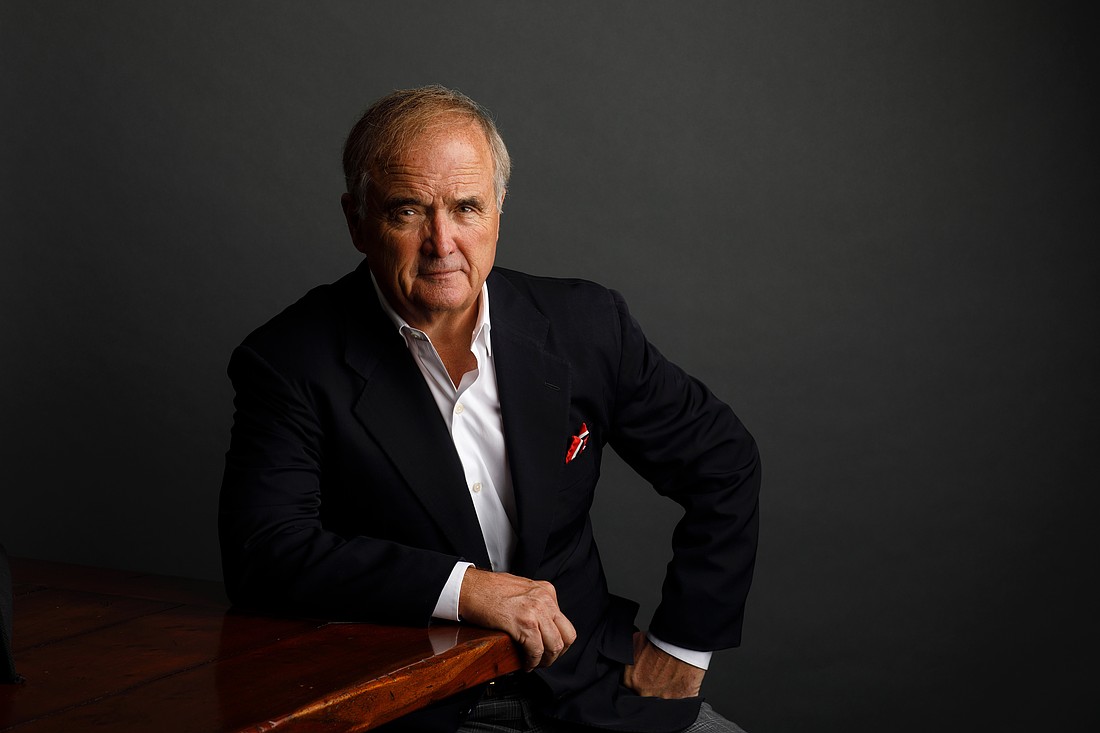
While much of the conversation about newspapers in the past 20 years has centered on job cuts, contraction and falling readership, there is an entrepreneur in Naples who sees a way to breathe new life into the troubled industry.
And he is putting his considerable wealth and the heft of his business empire behind it.
That man is David Hoffmann, chairman and founder of the Hoffmann Family of Cos.
Since 2022, Hoffmann — he has a net worth of some $2 billion, according to Forbes magazine — has bought 14 media companies covering 30 markets including in Michigan, California and Florida. Late last year the company bought a 5% share of DallasNews Corp., the parent of The Dallas Morning News.
In June, the company bought The Missourian, Hoffmann’s hometown newspaper in Washington, Missouri.
The company is also one of the leading — top two — shareholders in Davenport, Iowa-based Lee Enterprises, which owns The St. Louis Post-Dispatch, The Richmond Times-Dispatch and the Buffalo News, among other publications, including 350 weekly and specialty publications. Hoffmann is trying to buy the newspaper chain outright.
And the company plans to continue growing its media holdings, with the goal of being “at worst, the second biggest newspaper chain” in the country.
“I think newspapers are the fabric of America,” Hoffmann says.
“When I first got into it, I thought even if I don't make money this is something that I want to do because I'm passionate about it and I can afford to not make millions of dollars on everything I invest in. But, to be honest, this investment has worked out beautifully.”
What Hoffmann has bought into is an industry well into a transformation from the physical printed newspapers into digital delivery systems. This, at a time when readers have both more choices of where to get their news from, and who are engaging less with traditional media.
To say the shift has been difficult is an understatement.
Since 2005, more than 3,200 newspapers have closed in the U.S. according to an October report from Northwestern University’s Medill School of Journalism’s Local News Initiative.
And, during the year the report covers, the authors write, “500 of the largest daily and weekly newspapers in the United States have lost an estimated two million print and digital readers.”
Circulation, overall, has decreased by more than 60% since 2005.
So, given those realities, why would anyone willingly invest into the industry?
Hoffmann admits even his two sons — co-CEOs of the family-run company — weren’t initially happy when he announced a big investment in the newspaper industry.

But Hoffmann, who built an empire that currently owns more than 120 companies and employs 17,000, believes it is the right time to invest in the business and has a plan for it to rebound.
“Everything has a cycle. Everything has a bottom and things have a top,” Hoffmann says. “I think we're at the bottom right now.”
What Hoffmann is banking on is that local residents still care about what is going on in their communities and that no one can deliver that news better than local, community newspapers.
Readers, he believes, can get national and international news from several larger outlets. What they can’t get anywhere other than from a local paper is news about what’s happening on city and county councils, at schools, businesses and in courtrooms.
To that end, Hoffmann says the company is empowering local editors and publishers to make decisions based on their community’s specific needs and providing them the resources to allow them to do their jobs.
To be profitable, he says, advertising salespeople are incentivized with lower base salaries and bigger commissions and the company consolidates real assets. There are also small efficiencies that help turn a paper profitable. A small example is copy machines. If a paper operating out of a single floor has leases on four copiers, Hoffman gets rid of three of them.
There’s a lot the company, which is private and entrepreneurially-minded, does to make a paper profitable, Hoffmann says.
It isn’t all about cuts, either. Unlike many in the industry, Hoffmann’s papers are hiring journalists and — to his knowledge — have avoided layoffs. These hires are critical investments to do the kinds of reporting that will attract readers.
The focus on local coverage drives bigger picture decisions as well. “That's why Lee is so interesting to us,” Hoffmann says.
The chain’s largest papers are in Omaha and St. Louis. These papers, and others in the chain, are in smaller cities and communities hungry for coverage and “shouldn’t be trying to compete with the New York Times.”
“The smaller newspapers in the smaller communities is really what we're after. That's what Lee offers us.”
As for the fundamental question about how readers want to read the stories created by his publications, Hoffmann is banking that people want that news both digitally and in print.
Many will read the news digitally, but Hoffmann can't imagine a world where people aren't interested in picking up a newspaper and seeing a picture of a local kid who just scored a touchdown or a local young woman who won a golf tournament.
While the frequency of when print editions are published may have to change, “as long as I'm around whatever newspapers we own there's going to be a printed version along with the digital version of that as well.”
“I think the difference with our philosophy is that we think you can have both and there's a happy balance,” he says.
“And I'm betting big on that. I'm betting millions and millions of dollars that I'm right. To the tune of more than a half billion, I think. And I'm pretty confident in my investment.”